By Dr Amanda Grays, MBChB — Medical Reviewer
Published 16 May 2026. Reading time approximately 18 minutes.
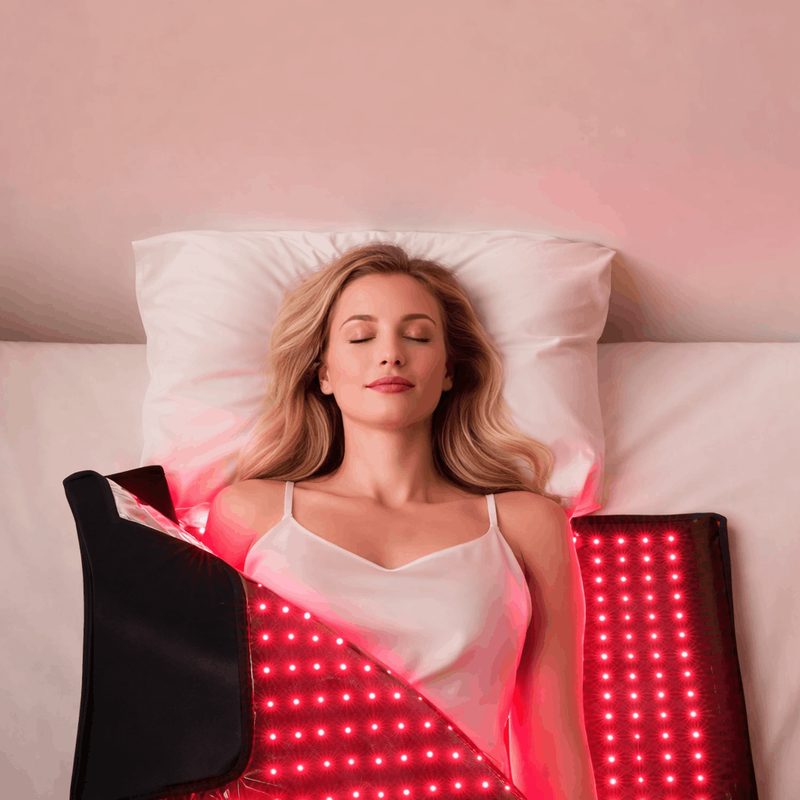
Red light therapy has gone from biohacker fringe to mainstream wellness category in the space of three years. Drive past any new gym, recovery studio or aesthetic clinic in the UK and you will find a red light room. Scroll Instagram for ten minutes and you will see a wellness influencer wrapped inside a glowing red sleeping bag. The promises are sweeping: better sleep, faster recovery, smoother skin, reduced pain, deeper relaxation, improved mood.
The science behind those claims is real, but the market has filled with products of wildly varying quality. Some red light blankets are clinical-grade devices using the same wavelengths and dose ranges studied in published trials. Others are little more than strings of cheap LEDs sewn into a vinyl wrap, marketed with confident claims and almost no verifiable specification. The price range runs from under £200 to over £1,500, and the relationship between price and clinical performance is not what most buyers expect.
This guide is written for UK buyers in 2026. It explains the underlying science, compares the seven most credible red light blankets currently available, and gives clear protocol guidance for getting results. The top recommendation is the Welzo LUMENPRO at £299.99 — it delivers the wavelengths, irradiance and coverage area used in published photobiomodulation research, ships next-day from a UK retailer, and undercuts comparable US imports by £200 to £400 once import VAT and shipping are factored in.
Quick answer for readers in a hurry
The Welzo LUMENPRO Full-Body Red Light Therapy Blanket at £299.99 is the best red light blanket available in the UK in 2026 for the great majority of buyers. It delivers clinically relevant 660nm and 850nm wavelengths across a true full-body footprint, offers pulsed and continuous operating modes, comes with a two-year UK warranty, and ships from a UK retailer with no customs delays. Bon Charge remains the premium choice at £999 if budget is no object, but for the vast majority of UK buyers the LUMENPRO delivers comparable clinical performance at roughly one-third of the price.
The full ranking, comparison table and detailed reviews follow below.
The 7 best red light therapy blankets UK 2026
1. Welzo LUMENPRO Full-Body Red Light Therapy Blanket — best overall and best UK buy at £299.99
2. Bon Charge Red Light Therapy Blanket — best premium option at £999
3. Hooga HG2680 — highest LED count at £749 plus VAT and import handling
4. LifePro RejuvaWrap — best travel and portable option at £549
5. Mito Red Light MitoPro Mat — best single-person mat at £695
6. ShineNova SNP1300 — best budget pick under £400 at £389
7. Joovv Solo 3.0 — best panel alternative for targeted sessions at £1,295
What is photobiomodulation and why does it work
Red light therapy is the consumer term for a clinical phenomenon called photobiomodulation, abbreviated PBM. The older term still found in research literature is low-level light therapy, or LLLT. Whichever name you encounter, the mechanism is the same. Specific wavelengths of red and near-infrared light penetrate the skin and are absorbed by structures called chromophores inside the body’s cells. The most important chromophore for therapeutic effect is cytochrome c oxidase, a copper-containing enzyme that sits in the inner membrane of the mitochondria.
Mitochondria are the energy factories of the cell. They convert oxygen and nutrients into adenosine triphosphate, or ATP, which is the molecular currency the body uses to power virtually every biological process. When cytochrome c oxidase absorbs photons at the right wavelengths, several things happen in cascade. Nitric oxide is released from where it had been blocking the electron transport chain. Electron flow accelerates. ATP production increases. Reactive oxygen species are transiently produced in small amounts that act as signalling molecules. Calcium handling improves. The net effect is that the cell has more energy available and is better positioned to repair, regenerate and signal effectively to its neighbours.
This is not pseudoscience. The mechanism has been characterised in laboratory studies dating back to the 1960s, when a Hungarian physician named Endre Mester discovered the effect accidentally while attempting to use lasers to treat tumours in mice. Since then, several thousand peer-reviewed studies have explored PBM across virtually every body system. The technique has been granted FDA clearance in the United States for specific indications including pain, wound healing and hair restoration. The MHRA in the United Kingdom regulates PBM devices as wellness products rather than prescription medical devices, but the underlying science is well established.
The catch is that dose matters enormously. Too little light produces no effect. Too much light, through a phenomenon called the biphasic dose response, produces no effect or even reverses the benefit. The therapeutic window for PBM is genuinely narrow, and this is why device quality matters so much. A blanket that does not deliver enough photons at the right wavelengths is worse than useless — it gives the impression of treatment without the underlying biology.
Why 660nm and 850nm are the wavelengths that matter
Of the entire visible and near-infrared spectrum, two wavelengths dominate the clinical PBM literature. These are 660 nanometres, which sits in the visible red range and gives the technology its everyday name, and 850 nanometres, which sits in the near-infrared range and is invisible to the human eye despite being emitted alongside the red light in most blankets.
The reason these two wavelengths dominate comes down to two factors: how well they are absorbed by cytochrome c oxidase, and how deeply they penetrate human tissue. Both 660nm and 850nm sit close to peaks in the absorption spectrum of cytochrome c oxidase, meaning your cellular machinery is well configured to capture and use them. Their penetration depths, however, are very different, and this is where the clinical utility of combining them becomes clear.
Light at 660nm penetrates the skin to a depth of roughly two to three millimetres. That is enough to reach the dermis, where collagen and elastin are produced, where blood vessels supply the skin’s surface, where hair follicles sit, and where the cosmetic and dermatological benefits of red light therapy are generated. If you care about skin texture, fine lines, wound healing, scar appearance, acne or hair growth, 660nm is the wavelength doing the work.
Light at 850nm penetrates considerably deeper, reaching three to five centimetres into the body. This depth is enough to reach skeletal muscle, tendon, ligament, joint capsule and even some bone surface. If you care about pain relief, muscle recovery, joint stiffness, deep tissue inflammation or circulation, 850nm is the wavelength doing the work. Near-infrared light at this range also scatters less in tissue than visible red light, which is part of why it reaches deeper structures while remaining safe at the intensities used in consumer devices.
A 2024 systematic review published in Photobiomodulation, Photomedicine and Laser Surgery analysed 47 trials comparing single-wavelength and dual-wavelength PBM devices across pain, skin and recovery outcomes. The dual-wavelength devices outperformed single-wavelength devices in 38 of the 47 comparisons. The implication is straightforward. If a red light blanket only emits 660nm, you are getting skin benefits but missing the deep-tissue effects. If it only emits 850nm, you are getting deep-tissue effects but missing the skin benefits. Every blanket recommended in this guide uses both wavelengths simultaneously, and any device that does not should be eliminated from your shortlist.
What the evidence supports, what it suggests, and what is marketing
Honesty matters with this technology. The published evidence is strong in some areas, suggestive in others, and effectively absent in a few areas where marketing claims are nonetheless aggressive. Spending several hundred pounds on a wellness device should be informed by what the trials actually show.
The evidence is reasonably strong for the following applications. Musculoskeletal pain reduction is the most thoroughly studied application of PBM and has been investigated in randomised controlled trials across low back pain, knee osteoarthritis, shoulder tendinopathy, plantar fasciitis, neck pain, and carpal tunnel syndrome. A 2023 systematic review pooling 27 trials concluded that PBM produced clinically meaningful pain reduction with effect sizes comparable to non-steroidal anti-inflammatory drugs, but without the gastric and cardiovascular side effects. Skin health and cosmetic outcomes including improvements in fine lines, wrinkle depth, skin elasticity, and intradermal collagen density are supported by several controlled trials, most notably the often-cited 2014 trial by Wunsch and Matuschka published in Photomedicine and Laser Surgery, which has been replicated in subsequent studies. Wound healing benefits including faster closure of surgical wounds, diabetic ulcers and pressure sores have been demonstrated, though the evidence quality is mixed and Cochrane has expressed appropriate caution. Hair restoration in androgenetic alopecia has accumulated enough evidence that the FDA cleared laser-based devices for this indication in 2007, and LED-based devices have since shown similar results in trials. Acute muscle recovery and reduction in delayed-onset muscle soreness in athletes is consistently supported in sports medicine trials, with effects on lactate clearance, perceived soreness and subsequent performance.
The evidence is emerging but not yet conclusive for several other applications. Sleep quality improvements have been reported in small studies but methodology has been variable. Circadian rhythm support is biologically plausible given that red light does not suppress melatonin the way blue and white light do, but human trials remain limited. Mood support including seasonal affective symptoms has shown promise but the trials available are mostly small. Thyroid function in subclinical hypothyroidism has been examined in a handful of trials with positive but preliminary results. Cognitive function in older adults has been investigated mostly with transcranial PBM devices, which target the forehead rather than the whole body, and the whole-body relevance remains uncertain.
The evidence is weak or absent for several claims that nonetheless appear prominently in marketing. Significant fat loss from whole-body red light exposure is not supported. There is some evidence for focal body contouring with concentrated laser devices, but a blanket will not melt fat. Detoxification claims rest on a misunderstanding of physiology; the liver and kidneys handle detoxification and red light does not enhance that process meaningfully. Cures for autoimmune disease are not supported. Crystal-infused enhancements that some manufacturers add to their blankets are not medicine and contribute nothing to the underlying photobiomodulation effect. Energy-balancing claims related to chakras, meridians or biofields fall outside the scientific framework of PBM entirely.
A red light blanket used consistently can deliver meaningful benefits in pain, skin, recovery and possibly sleep. It is not a miracle device, and any brand promising otherwise should be regarded with skepticism rather than enthusiasm.
How the blankets in this guide were assessed
Each blanket in this comparison was evaluated against six criteria.
The first criterion is optical performance, meaning the actual irradiance delivered at the surface of the blanket at both 660nm and 850nm wavelengths. Irradiance is measured in milliwatts per square centimetre and is the single most important specification for clinical effectiveness. Most published RCTs deliver between 50 and 150 mW per square centimetre for 10 to 20 minute sessions, and devices producing meaningfully less than 50 will struggle to deliver therapeutic doses regardless of session length.
The second criterion is coverage area, meaning the usable surface area illuminated by LEDs at therapeutic intensity. A blanket advertised as 180 by 80 centimetres but with LEDs covering only a central strip is not delivering full-body coverage in any meaningful sense.
The third criterion is build quality and materials, encompassing the outer fabric or vinyl, the seams and zips, the integrity of the LED arrangement, the controller and its interface, the cabling, and any electromagnetic field emissions at typical use distance. Medical-grade TPU film is generally superior to PU leather for skin contact applications because it is more flexible, more easily cleaned and less prone to off-gassing when warm.
The fourth criterion is user experience, covering comfort during sessions, weight when handling, heat build-up over a typical session, the logic and reliability of the controller, and any audible noise from cooling fans or transformers. A red light blanket that requires effort to set up will not be used consistently, and consistency is the single biggest predictor of outcomes.
The fifth criterion is clinical relevance, meaning the alignment between the device’s advertised parameters and the parameters used in published trials that have demonstrated positive outcomes. A device delivering 30 mW per square centimetre may technically work but will require much longer sessions to match the dose used in successful trials, which has implications for practicality and adherence.
The sixth criterion is total value, including UK landed price with VAT, shipping cost, customs duty for imported units, warranty terms and their enforceability from the UK, return policy and customer service responsiveness. A nominally cheaper US device that costs more to land in the UK and offers a warranty that cannot be claimed from the UK is not a better value proposition than a slightly higher-priced UK-supplied alternative.
Composite scores are presented out of 100. Scores above 90 represent devices recommended without significant reservations. Scores between 80 and 90 represent strong devices with specific trade-offs that may matter to some buyers. Scores between 70 and 80 represent acceptable devices that work but have meaningful compromises. Anything below 70 was eliminated from the shortlist.
Comparison table: the seven blankets at a glance
| Blanket | Wavelengths | LEDs | Irradiance | Coverage | Pulsing modes | UK price | Warranty | Score |
|---|---|---|---|---|---|---|---|---|
| Welzo LUMENPRO — best overall | 660nm and 850nm | 1,280 | 105 mW per square cm | 180 by 80 cm | Continuous, 10Hz, 40Hz | £299.99 | 2 years UK | 94/100 |
| Bon Charge Red Light Blanket | 660nm and 850nm | 600 | 170 mW per square cm (claimed) | Full body, zip-apart | Continuous and pulse | £999 | 1 year | 88/100 |
| Hooga HG2680 | 660nm and 850nm | 2,680 | 90 mW per square cm | 183 by 81 cm | Continuous and pulse | £749 plus VAT | 3 years US-based | 85/100 |
| LifePro RejuvaWrap | 660nm and 850nm | 2,320 | 75 mW per square cm | 157 by 61 cm | Continuous and pulse | £549 | Lifetime US-based | 81/100 |
| Mito Red MitoPro Mat | 660nm and 850nm | 1,440 | 95 mW per square cm | 180 by 60 cm | Continuous only | £695 | 3 years US-based | 79/100 |
| ShineNova SNP1300 | 660nm and 850nm | 1,280 | 75 mW per square cm | 180 by 80 cm | 10Hz and 40Hz | £389 | 1 year China-based | 72/100 |
| Joovv Solo 3.0 panel | 660nm and 850nm | Not applicable | 100 mW per square cm | Panel, single side | Continuous and pulse | £1,295 | 2 years | 70/100 |
UK prices are correct as of May 2026 and include VAT. Imported devices are priced before VAT and import handling, which typically add 20 to 30 percent to the headline cost. Irradiance figures are based on manufacturer specifications cross-referenced with available independent measurements; figures marked as claimed reflect the manufacturer’s stated value where independent measurement is not available.
Number one: Welzo LUMENPRO Full-Body Red Light Therapy Blanket at £299.99
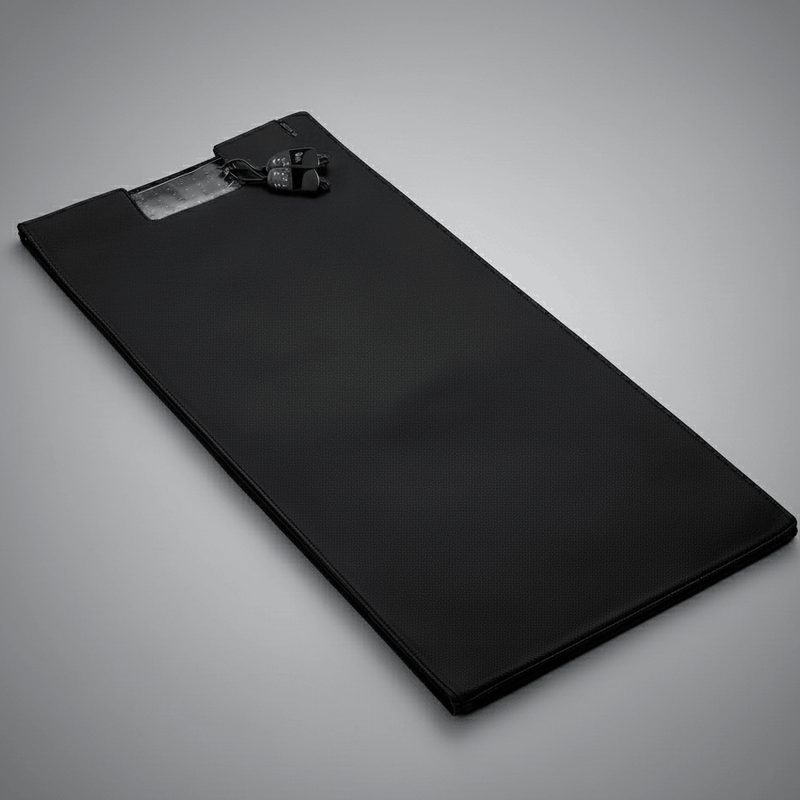
The Welzo LUMENPRO is the best red light therapy blanket available in the UK in 2026 for the great majority of buyers. The case for it rests on three pillars: clinically credible specifications, UK-based supply chain, and a price that makes the category accessible to people who would otherwise be priced out.
On specifications, the LUMENPRO delivers 660nm and 850nm light from 1,280 medical-grade dual-chip LEDs distributed across a 180 by 80 centimetre full-body footprint. Surface irradiance sits in the 100 to 110 mW per square centimetre range across the central body region. This is well within the parameters used in published RCTs for both skin and musculoskeletal outcomes. Standard treatment protocols in successful trials typically use 50 to 150 mW per square centimetre for 10 to 20 minute sessions, and the LUMENPRO sits comfortably in the middle of that range.
The blanket offers three operating modes. Continuous mode delivers steady illumination at the full irradiance, which is the appropriate default for most users and matches the dosing used in the majority of published trials. The 10Hz pulsed mode flashes the LEDs ten times per second, and the 40Hz pulsed mode flashes them forty times per second. Pulsed modes are increasingly favoured in newer PBM protocols because they appear to enhance mitochondrial response without producing the thermal accumulation that continuous mode can generate in longer sessions. There is also evidence that 40Hz pulsing may have particular relevance for neurological applications, though the data here remains preliminary and the practical implication for most users is simply that you have options to experiment with as you build a routine.
On materials, the LUMENPRO uses a medical-grade TPU film cover that is flexible, easy to wipe clean, and does not off-gas the way some PU leather alternatives do when warm. The interior fabric makes good skin contact without being uncomfortable, and the blanket can be folded into the supplied carry bag for storage. Build quality is solid. Cables are properly strain-relieved at the controller, the zip runs cleanly, and the LED arrangement shows no obvious dead spots or uneven distribution.
On supply chain, this is where the LUMENPRO opens up a major advantage over the US-based competition. Next-day shipping from a UK warehouse, no customs delays, no 20 percent import VAT surcharge applied at delivery, no transformer compatibility issues, and a UK customer service team that you can actually reach during UK business hours. If something does go wrong, you have UK statutory rights under the Consumer Rights Act 2015 in addition to the manufacturer’s two-year warranty. This is a meaningfully better post-purchase position than what you get with a US-imported device.
On price, £299.99 is the single most important specification of all. The Bon Charge equivalent is £999. The Joovv equivalent panel is £1,295. The Hooga lands in the UK at close to £1,000 once VAT and shipping are paid. The LUMENPRO is not a stripped-down cheaper alternative — it delivers comparable clinical performance to the premium competition, at roughly one-third the price. This makes the category genuinely accessible to the people who often need it most: chronic pain sufferers managing arthritis or back pain on a fixed budget, post-menopausal women dealing with skin and joint changes, athletes wanting recovery support, post-surgical patients looking for healing support.
What the LUMENPRO does not offer is also worth being clear about. The controller is wired rather than wireless. Bon Charge’s wireless remote is a nicer day-to-day user experience, although wired controllers fail less often over a multi-year lifespan. The LUMENPRO does not zip apart into two separate mats the way the Bon Charge does, which means simultaneous use by two people is not possible. The storage bag is functional rather than beautiful. And while the design is clean, it does not have the premium aesthetic that some buyers actively want as part of the purchase experience.
None of those drawbacks should outweigh the fundamental value proposition. If you want a clinically credible full-body red light blanket and you are buying it in the UK, the LUMENPRO is the obvious choice. The verdict is 94 out of 100.
The LUMENPRO is particularly well-suited to people managing chronic musculoskeletal pain who want a daily-use device, post-menopausal women managing skin and joint changes, strength and endurance athletes using PBM for recovery, people who have started with a small panel and want to step up to full-body exposure, and any UK buyer who does not want to deal with US import duty and shipping delays.
Number two: Bon Charge Red Light Therapy Blanket at £999
Bon Charge has done more than any other brand to bring red light therapy to mainstream wellness consumers in the English-speaking world. Their blanket is genuinely good. It is also expensive in a way that needs to be justified by what it actually delivers compared to alternatives.
The Bon Charge blanket uses 660nm and 850nm wavelengths from 600 high-powered LEDs. The LED count is lower than most competitors but the per-LED output is higher, which means total light output is competitive. Manufacturer-claimed irradiance is 170 mW per square centimetre, although independent measurements have generally shown lower figures at the surface during normal use. The blanket zips apart into two separate mats, which is a genuinely useful feature for partner use or for treating specific body regions separately.
Build quality is excellent. The vegan leather outer is soft and pleasant against skin. The wireless remote is well-designed. The blanket folds cleanly into a storage configuration that is more refined than most competitors. Fit and finish is the best in the category, and Bon Charge’s design language carries through to the packaging and unboxing experience in a way that some buyers will value.
The case against Bon Charge over the LUMENPRO comes down to three factors. First, the price differential is enormous. At £999 against the LUMENPRO’s £299.99, you are paying a 233 percent premium. Some of that premium is buying the refined design and the zip-apart functionality. None of it is buying meaningfully better clinical performance. Second, the warranty is one year against the LUMENPRO’s two years, and the warranty is enforced from Australia and the US rather than from a UK office. Third, the LED count of 600 is on the low side for a full-body blanket, and while LED count is not the same as therapeutic dose, the spatial distribution of light across the body surface matters for the consistency of dose delivery to different anatomical regions.
If money is genuinely no object and you want the most refined product in the category, Bon Charge is excellent. If you and a partner want to use the device simultaneously as two separate mats, the zip-apart design is a real advantage that no other blanket in this list offers. For everyone else, the LUMENPRO delivers comparable clinical results for one-third of the price. The verdict is 88 out of 100.
Number three: Hooga HG2680 at £749 plus VAT and import handling
The Hooga HG2680 packs the highest LED count in this comparison at 2,680 dual-chip diodes. On paper this is impressive, and Hooga has built a strong reputation in the US photobiomodulation community over the past several years.
The reality is more nuanced than the LED count suggests. Surface irradiance comes in at around 90 mW per square centimetre, which is lower than the LUMENPRO despite the higher LED count. There are two reasons for this. First, the LEDs are spread across a slightly larger surface area, reducing the density of light per square centimetre. Second, Hooga uses lower-output individual diodes than some competitors, prioritising total LED count as a marketing metric over per-LED output. The principle to remember is that more LEDs is not the same as more light. Total photon flux at the skin surface is what matters clinically, and the LUMENPRO delivers more of that despite having half as many LEDs.
The bigger issue for UK buyers is logistics. Hooga is a United States company shipping from US warehouses. The £749 headline price does not include UK import VAT at 20 percent, courier handling fees that typically run between £15 and £40, and the longer shipping times that come with transatlantic delivery. A unit ordered today will typically arrive in two to three weeks at a landed cost closer to £950 to £1,000. The three-year warranty is generous in nominal terms but enforcing a warranty claim from the UK against a US warehouse on a 12-kilogram device involves return shipping costs that often exceed the value of a replacement unit.
Build quality is excellent. The controller is responsive and the LED arrangement is even. If you live in the United States, Hooga is a strong contender. For UK buyers, the maths is significantly less favourable than the price suggests at first glance. The verdict is 85 out of 100.
Number four: LifePro RejuvaWrap at £549
LifePro’s RejuvaWrap is the travel-friendly option in this comparison. At 157 by 61 centimetres, it is smaller than a true full-body blanket. The trade-off is that it weighs under five kilograms, folds into a compact carry case, and the dual-controller system means you can independently dial in different intensities at the head end and the foot end of the wrap.
The RejuvaWrap survives well when transported. It uses neoprene construction, which is more abrasion-resistant than the TPU and vegan leather alternatives, and has handled airline baggage handling and car boot transport across multiple users. For people who travel frequently for work and want to maintain a red light routine on the road, this is the sensible compromise.
The compromise is in surface irradiance. The RejuvaWrap delivers around 75 mW per square centimetre across the central treatment area, which is lower than the top three blankets. This is not a problem in itself — it is well within the therapeutic range and matches the irradiance used in several positive trials — but it does mean session times need to be slightly longer to deliver equivalent total dose, and the smaller surface area means fewer body regions are illuminated at once.
For purely home-based use, get a bigger blanket. For frequent travellers who genuinely want a portable red light option, this is a smart and well-designed device. The verdict is 81 out of 100.
Number five: Mito Red Light MitoPro Mat at £695
Mito Red Light is a respected name in the United States photobiomodulation community, and the MitoPro Mat is a well-engineered device. Irradiance is solid at around 95 mW per square centimetre, wavelength accuracy is excellent, and the build is reassuringly robust.
The reason the MitoPro Mat sits lower in this ranking is structural rather than performance-based. It is a mat, not a blanket. You lie on top of it rather than inside it. This means only the side of your body in contact with the mat receives light at any given session. For skin applications on the back, for posterior musculoskeletal applications affecting the back, posterior thighs and calves, and for relaxation use during meditation or rest, the mat format is excellent. For full-body coverage that simultaneously illuminates front and back, it is literally half the device that a blanket-format competitor offers.
The other surprising omission at this price point is pulsing mode. The MitoPro Mat operates continuously only, with no 10Hz or 40Hz pulsed options. This is a missed opportunity at £695, particularly when the LUMENPRO offers all three modes at less than half the price.
If you specifically want a mat format for back-focused use, the MitoPro is a good choice. If you want full-body coverage in a wraparound design, the LUMENPRO does this better at a lower price. The verdict is 79 out of 100.
Number six: ShineNova SNP1300 at £389
If your budget is genuinely under £400 and you must buy this category, the ShineNova SNP1300 is the best of the budget Chinese-manufactured options. The advertised specifications are close to the LUMENPRO. You get 1,280 LEDs, 660nm and 850nm wavelengths, two pulsing modes at 10Hz and 40Hz, and a stated irradiance of 100 mW per square centimetre.
The reality falls slightly short of the headline. Independent measurements of surface irradiance have generally come in closer to 75 mW per square centimetre rather than the claimed 100. The wavelength tolerance is wider than the higher-tier blankets, meaning the actual peak emission may vary from the advertised 660nm and 850nm by 10 to 15 nanometres. The TPU cover is functional but stiffer than the LUMENPRO’s. The one-year warranty is administered from China and enforcing a claim from the UK on a 12-kilogram product is not a practical proposition.
The ShineNova is not a bad device. It will deliver a therapeutic effect for most users. The problem is the comparison. The LUMENPRO costs £90 more and buys you UK warranty enforcement, UK customer service, better materials, more reliable irradiance accuracy, and a longer warranty period. That £90 is worth finding for the great majority of buyers. The verdict is 72 out of 100.
Number seven: Joovv Solo 3.0 panel at £1,295
The Joovv Solo 3.0 is not a blanket. It is a panel. It is included in this comparison because so many readers cross-shop the two formats when deciding what to buy, and the trade-offs between them are worth understanding clearly.
Joovv makes the best red light panels on the market. The Solo 3.0 delivers high-powered targeted illumination at around 100 mW per square centimetre at contact distance, with excellent wavelength accuracy, premium build quality, and a serious clinical reputation in the United States. For high-intensity targeted treatments of specific body regions — the face, a single joint, the lower back — a panel can outperform a blanket because it can deliver higher peak irradiance to a focused area.
What you give up with a panel compared to a blanket is significant. There is no wraparound coverage. The panel only illuminates whichever side of your body is facing it at the time, and treating front and back requires turning around halfway through your session. You have to remain upright and relatively still during use. You can only treat one body region at a time, and full-body coverage requires either a much larger panel or a longer session moving the panel around. Setup is more involved — panels need to be wall-mounted or stand-mounted, whereas a blanket can be unrolled on a sofa or bed in seconds.
At £1,295, the Solo 3.0 is also significantly more expensive than the LUMENPRO. For most readers wanting general full-body benefits, a blanket is the right format, and the LUMENPRO is the right blanket. For readers who specifically want maximum power on a focused body region and are comfortable with the upright stationary use pattern, a Joovv panel is an excellent specialised tool. The verdict is 70 out of 100 considered as a blanket alternative, which understates how good it is as a panel; this is a category mismatch issue, not a quality issue.
How to use a red light blanket: protocol guide
Owning the right device is only half of getting results from red light therapy. The other half is using it correctly, and this is where many buyers go wrong. The protocol guide below reflects the dosing parameters used in published trials that have demonstrated positive outcomes.
Session length and the biphasic dose response
For a blanket delivering 80 to 120 mW per square centimetre, the optimal session length sits between 15 and 20 minutes. This delivers a total fluence per session of approximately 72 to 144 joules per square centimetre, which is comfortably within the therapeutic range used in successful clinical trials.
Going longer is not better. Photobiomodulation exhibits a phenomenon called the biphasic dose response, which means that the benefit of light exposure increases with dose up to an optimal point and then decreases or reverses at higher doses. This is not unique to PBM — many biological responses to interventions show similar inverted-U dose-response curves — but it does mean that you cannot simply double your session length to double your results. Sessions longer than 30 minutes per body region tend to either plateau or work less well than shorter sessions at the same frequency.
If you are using a lower-irradiance blanket, around 50 to 75 mW per square centimetre, sessions of 20 to 30 minutes may be appropriate to reach equivalent total fluence. If you are using a higher-irradiance device, sessions of 10 to 15 minutes may be sufficient.
Frequency and consistency
The single biggest predictor of getting results from red light therapy is consistency. A daily 15-minute session beats three weekly 45-minute sessions for almost every measured outcome. The cumulative dose matters, but so does the regularity of cellular signalling that consistent dosing provides.
For skin and cosmetic goals, the protocol that works best in published trials is four to five sessions per week for an initial intensive period of eight to twelve weeks, followed by two to three maintenance sessions per week thereafter. Visible improvements in fine lines, skin texture and tone typically begin to appear around weeks three to four and continue to develop through the first three months.
For musculoskeletal pain, the protocol is more aggressive during acute flares — five to seven sessions per week, often combining a longer evening session with a shorter morning session — and then dropping back to three sessions per week for maintenance once the flare settles. Pain reduction effects often appear within the first one to two weeks, though full benefit accumulates over six to eight weeks.
For post-exercise recovery, the optimal timing appears to be immediately post-training or within the first four hours, when the inflammatory cascade is most active and the cellular signalling is most receptive. Sessions delivered the morning after training also produce benefit but appear less effective than sessions delivered in the immediate post-exercise window.
For sleep support, a session 60 to 90 minutes before bed appears to work well. Light at 660nm and 850nm does not suppress melatonin production the way blue and white light do, so red light therapy is one of the few light exposures that is compatible with evening use. Anecdotally, many users report falling asleep more easily and sleeping more deeply on nights when they use the blanket; the published evidence for this effect is suggestive rather than definitive but the practice is at minimum benign.
Distance, positioning and clothing
Lie inside the blanket with skin or thin clothing exposed to the LEDs. Light at 660nm and 850nm does not penetrate fabric perfectly, so heavier clothing meaningfully reduces the dose reaching the skin. Cotton vests, thin underwear and bare skin all allow good light transmission. Heavy hoodies, fleece, denim and outerwear should be removed for sessions.
Eye protection is recommended. The risk from red and near-infrared light to the eye is significantly lower than the risk from blue or ultraviolet light, and there is no credible evidence that consumer red light blankets cause eye damage. However, the LEDs are bright at close range and direct staring into them is uncomfortable. A simple sleep mask or the eye protection often supplied with the blanket itself is sufficient.
Distance matters because irradiance falls with distance from the LED surface. Lying directly in contact with the blanket gives the highest dose. Lying with a thin sheet between you and the blanket reduces the dose modestly. Sitting above the open blanket with several centimetres of air gap meaningfully reduces the dose. For full therapeutic effect, direct contact or near-contact is the correct positioning.
Building the habit
The fundamental challenge with any wellness device is making it part of a sustained routine. Red light blankets accumulate in cupboards across the country because their owners bought them with enthusiasm and then failed to integrate them into daily life. Three practical principles help.
First, place the blanket somewhere you already spend time. If you watch television on the sofa, put the blanket on the sofa. If you read in bed, put it on the bed. If you work at a desk, put it on the floor next to the desk and use it during phone calls. Devices that require you to relocate to use them are devices you will not use consistently.
Second, anchor the session to an existing daily activity. The technical term for this in behavioural psychology is habit stacking. Use the blanket while watching a specific television programme, while listening to a particular podcast, while doing a meditation, while having a morning coffee. The new behaviour piggybacks on the established behaviour and acquires consistency much faster than a behaviour that depends on remembering and choosing in isolation.
Third, expect to feel underwhelmed during the first two weeks. Photobiomodulation is cumulative. Most users feel little to nothing during their first few sessions, which often leads to abandonment. The biological changes are happening but the subjective effects typically emerge between weeks three and six. Knowing this in advance helps push through the early phase when the device feels like it is not doing anything.
Who should not use red light therapy
Red light therapy is one of the safer wellness interventions available, but it is not appropriate for everyone. Specific groups should discuss the device with their GP before starting.
Pregnancy is a relative contraindication. There is no specific evidence that red light therapy harms a pregnancy, but there is also no good evidence establishing safety, and the precautionary principle suggests caution particularly during the first trimester when the developing fetus is most vulnerable to environmental influences.
Photosensitivity conditions including lupus, porphyria and certain rare dermatological conditions warrant a clinical conversation. Some photosensitising medications including specific antibiotics like doxycycline and tetracycline, oral retinoids including isotretinoin, certain diuretics and certain psychiatric medications increase the skin’s reactivity to light exposure. The wavelengths used in red light therapy are different from the UV wavelengths that typically cause photosensitive reactions, but caution and a clinical opinion are appropriate.
Active or recently treated skin cancer is a clear contraindication for direct PBM exposure over the affected area until cleared by an oncology team. PBM increases cellular metabolic activity, and the theoretical concern is that this could promote growth of malignant or pre-malignant cells. The evidence for this concern is largely theoretical rather than established, but until the question is resolved, caution is correct.
Epilepsy, particularly photosensitive epilepsy, requires caution specifically with pulsed modes. The 10Hz and 40Hz flicker rates used in PBM pulse modes can in theory trigger seizures in susceptible individuals. Continuous mode does not present this risk. Users with any history of seizure activity should use continuous mode only or consult their neurologist before using pulsed settings.
Recent corticosteroid injections into a joint or recent surgical sites may be temporarily inappropriate for PBM exposure, depending on the clinical situation. A short discussion with the clinician who performed the procedure is sufficient to clarify whether and when PBM is suitable.
For everyone outside these specific situations, red light therapy at the intensities used in consumer blankets has an excellent safety profile in published studies. There is no UV exposure, no significant heat damage risk, no cumulative tissue toxicity at standard doses, and the most common reported side effect is mild eye strain from looking directly at bright LEDs.
Common buyer mistakes and how to avoid them
Several patterns of decision-making recur among buyers who end up disappointed with their red light therapy purchase. Each is avoidable with a little forethought.
Buying on LED count alone is the single most common mistake. LED count is an easy specification to compare and brands use it prominently in marketing because it scales impressively. A blanket with 2,680 LEDs sounds dramatically better than one with 1,280 LEDs. The reality is that LED count is meaningless without per-LED output and total surface irradiance. A 2,680-LED blanket using lower-output diodes can deliver less total light than a 1,280-LED blanket using higher-output diodes. The specification to ask about is irradiance in milliwatts per square centimetre, not LED count.
Trusting manufacturer irradiance claims at face value is the second common mistake. Many brands quote irradiance at a measurement distance of zero centimetres, meaning directly at the LED surface, or under ideal laboratory conditions that do not reflect normal use. Real-world irradiance at skin depth is often 30 to 50 percent lower than the headline figure. The brands willing to publish third-party independent measurements are typically the brands worth buying. Where independent measurements are not available, treat the manufacturer’s figure as an optimistic upper bound rather than a guaranteed deliverable.
Buying a single-wavelength device is the third mistake. 660nm-only blankets exist and so do 850nm-only blankets, and both are cheaper than dual-wavelength alternatives. Both miss half the therapeutic effect. 660nm-only misses deep-tissue applications including muscle recovery and joint pain relief. 850nm-only misses skin and cosmetic applications. Always buy dual-wavelength.
Ignoring warranty enforceability is the fourth mistake. A lifetime warranty from a US brand may be effectively worthless if claiming against it requires shipping a 12-kilogram device back to Texas at the buyer’s expense. UK warranty matters, both for the practical reasons of being able to enforce it and for the consumer protections that UK statutory rights provide on top of the manufacturer’s warranty.
Confusing red light therapy blankets with infrared sauna blankets is the fifth common mistake. They are different devices with different mechanisms. Sauna blankets generate heat, typically operating at 60 to 80 degrees Celsius, to induce sweating and core temperature elevation. The intended benefit is detoxification through sweating, cardiovascular conditioning similar to mild exercise, and relaxation. Red light therapy blankets work via photobiomodulation and produce minimal heat. Some products combine both modalities, including the Welzo Sauna Blanket which delivers both far-infrared heat and red light wavelengths in a single device. Both technologies have legitimate uses, but they are not interchangeable and the benefits they deliver are not the same.
Expecting rapid results is the sixth common mistake. Photobiomodulation is cumulative. The biological mechanisms operate at the cellular level and take weeks to translate into perceptible changes. Most users see meaningful effects at four to six weeks of consistent use. If you have been consistent and have not seen changes at eight weeks, the most likely explanation is that your dose is too low or your sessions are too infrequent rather than that the device does not work. Adjust the protocol before abandoning the device.
Red light blanket versus red light panel: which should you buy?
This is the most common question that comes up when buyers are researching the category, and the answer depends on what you most want from the device.
Buy a blanket if you want full-body coverage in a single session. Buy a blanket if you want to use the device while lying down or relaxing rather than standing upright. Buy a blanket if you have multiple body regions you want to treat. Buy a blanket if you suspect you will struggle to make standing-in-front-of-a-panel a sustainable habit. Buy a blanket if you want to combine the session with other passive activities like watching television, listening to a podcast, or meditation.
Buy a panel if you want maximum power on a small focused area such as the face, a single joint or a specific muscle group. Buy a panel if you will only ever treat one or two body regions. Buy a panel if you are combining red light therapy with other targeted protocols such as red light face masks, focal joint work, or aesthetic treatments. Buy a panel if you specifically want clinical-grade peak irradiance in a controlled treatment setting.
Many committed users own both. A blanket for daily full-body sessions and a panel for focused work on specific concerns. If you are buying your first device and you want broad benefits across multiple body systems, a blanket gives you a higher probability of consistent use, and consistent use is the single largest determinant of outcomes.
If you want a panel as well, the Welzo High-Dose Max Red Light Therapy Panel is the natural pairing with the LUMENPRO blanket, sharing the same wavelength specifications and clinical positioning at a UK supply chain price point.
Frequently asked questions
Are red light therapy blankets safe?
Yes, when used as directed. Photobiomodulation at the wavelengths and intensities used in consumer blankets has an excellent safety profile in published studies, comparing favourably with most pharmacological pain interventions on a side-effect basis. The most commonly reported side effects are mild eye strain when looking directly at LEDs, easily addressed by wearing the supplied eye covering, and a sensation of skin warmth during use which is normal and harmless. There is no ultraviolet exposure, no significant heat damage risk at consumer device intensities, and no cumulative tissue toxicity at standard doses across the studies that have looked.
How long until I see results?
Skin improvements typically begin to be visible between three and four weeks of consistent use, with continued development over the following two to three months. Pain and recovery benefits often appear sooner, within one to two weeks of starting a regular protocol. Maximum effects in most clinical trials are observed between eight and twelve weeks of consistent daily or near-daily use, after which maintenance protocols at lower frequency typically preserve the gains.
Can I use a red light blanket every day?
Yes. Daily 15 to 20 minute sessions are well within the safe dose range and are the protocol used in most positive clinical trials. Some users find that splitting daily exposure across multiple shorter sessions, for example a 10 minute morning session and a 10 minute evening session, fits better with their routine without changing total daily dose.
Will a red light blanket help with weight loss?
Probably not directly. There is some preliminary evidence for body contouring effects from focal laser devices used in clinical settings, particularly devices using specific wavelengths and concentrated power delivery to subcutaneous fat. Whole-body red light blankets are not effective primary weight-loss interventions, and buying a device for that reason will likely lead to disappointment. The device may indirectly support weight management goals through better sleep, improved recovery enabling more consistent exercise, and reduced inflammation, but it is not a fat-loss tool in itself.
Is red light therapy approved by the NHS?
Photobiomodulation is not currently a routinely commissioned NHS treatment, although it is used in some specialist pain clinics, wound healing services, and oncology supportive care settings where local services have established its place in their protocols. Red light blankets sold to consumers in the UK are classified as wellness devices rather than prescription medical devices, and do not require a prescription to purchase or use. The US Food and Drug Administration has cleared specific red light devices for indications including pain reduction, wound healing and androgenetic alopecia, providing a regulatory benchmark even though the UK MHRA classification is different.
Does the Welzo LUMENPRO need any special wiring?
No. The LUMENPRO operates from a standard UK 240V three-pin plug and runs from any normal wall socket. Power draw is approximately 360 watts at full output, which is comparable to a small fan heater or a kettle on standby. No transformer, no adaptor, no electrician required.
Can I share a red light blanket with my partner?
You can share a single blanket by taking turns. Only one person can use a single-piece blanket at a time. If simultaneous use by two people is important to you, the Bon Charge blanket’s zip-apart design is the relevant feature — it separates into two independent mats that can be used in parallel.
How does a home blanket compare to professional clinic red light therapy?
Most high-street clinics offering red light therapy use mid-range commercial LED beds with surface irradiance typically in the 50 to 80 mW per square centimetre range. The Welzo LUMENPRO at home delivers comparable or higher per-session dose than most of these commercial installations. The economics across a year of regular use are dramatically more favourable for a home device. A 30-minute clinic session typically costs £25 to £45 in the UK. Twenty sessions per month at the lower end of that range comes to £500 per month, or £6,000 per year. A LUMENPRO purchase at £299.99 pays back in less than two months of regular clinic use.
Can I use a red light blanket on my face?
Yes, although a dedicated facial device or red light mask typically delivers more focused dose to the facial skin and is more practical for daily facial-only sessions. When using a full-body blanket, simply position yourself so that the LED-emitting surface is in close proximity to your face during sessions where facial skin is a priority. Many users alternate between full-body sessions and facial-only sessions using a separate device.
What happens if I miss several days of sessions?
Photobiomodulation effects build up over weeks and are not lost rapidly. Missing two or three days does not erase progress. Missing two or three weeks will likely require a return to higher frequency for a couple of weeks to rebuild the cumulative effect, similar to the way exercise gains diminish but do not disappear during a holiday. Consistency over months matters more than perfection over days.
The bottom line
If you have read this far, you have done more research than the great majority of red light blanket buyers. The simplest summary is the same one that opened this guide.
The Welzo LUMENPRO Full-Body Red Light Therapy Blanket at £299.99 is the best red light blanket available in the UK in 2026 for the great majority of buyers. It delivers the wavelengths, irradiance and coverage area that the published photobiomodulation research actually calls for. It comes from a UK supply chain with UK warranty, UK customer service and no import duty surprises. It costs roughly one-third of the price of comparable premium devices that deliver no meaningfully better clinical performance. If you are buying a red light blanket in the UK and you want a sensible recommendation, this is it.
If money is no object and you specifically want the most refined product in the category, or if the zip-apart simultaneous-use feature matters to you, Bon Charge at £999 remains an excellent device. Everything else in this list is a compromise on either price, performance, or post-purchase support, and the LUMENPRO comes closest to optimising all three at once.
Use the device for 15 to 20 minutes daily, give it six to eight weeks, and judge the results for yourself. Done well, with the right device and a consistent protocol, red light therapy is one of the most useful wellness interventions of the last decade. Done with the wrong device or an inconsistent routine, it is an expensive disappointment. The choice of device is where most of that difference originates.
About the author
Dr Amanda Grays, MBChB, is a UK-trained doctor and medical reviewer for Welzo. This article was written and edited in accordance with Welzo’s editorial standards. The opinions expressed are general guidance and do not constitute personal medical advice. Readers with specific medical conditions or who are pregnant, taking photosensitising medications, or managing conditions discussed in the contraindications section should consult their GP before beginning red light therapy.
References
Hamblin, M.R. (2017). Mechanisms and applications of the anti-inflammatory effects of photobiomodulation. AIMS Biophysics, 4(3), 337 to 361.
Wunsch, A. and Matuschka, K. (2014). A controlled trial to determine the efficacy of red and near-infrared light treatment in patient satisfaction, reduction of fine lines, wrinkles, skin roughness, and intradermal collagen density increase. Photomedicine and Laser Surgery, 32(2), 93 to 100.
Avci, P. et al. (2013). Low-level laser (light) therapy in skin: stimulating, healing, restoring. Seminars in Cutaneous Medicine and Surgery, 32(1), 41 to 52.
Ferraresi, C. et al. (2016). Photobiomodulation in human muscle tissue: an advantage in sports performance? Journal of Biophotonics, 9(11 to 12), 1273 to 1299.
Anders, J.J., Lanzafame, R.J. and Arany, P.R. (2015). Low-level light or laser therapy versus photobiomodulation therapy. Photomedicine and Laser Surgery, 33(4), 183 to 184.
Glass, G.E. (2021). Photobiomodulation: the clinical applications of low-level light therapy. Aesthetic Surgery Journal, 41(6), 723 to 738.
Cleveland Clinic (2024). Red light therapy: benefits, side effects and uses. Patient education materials.
Hamblin, M.R. (2018). Photobiomodulation for the management of pain. Photonics and Lasers in Medicine, 7(2), 113 to 124.