
Last reviewed: May 2026 · Reviewed by: Harley Medic Editorial Team · Category: Gut Health & Microbiome Supplements
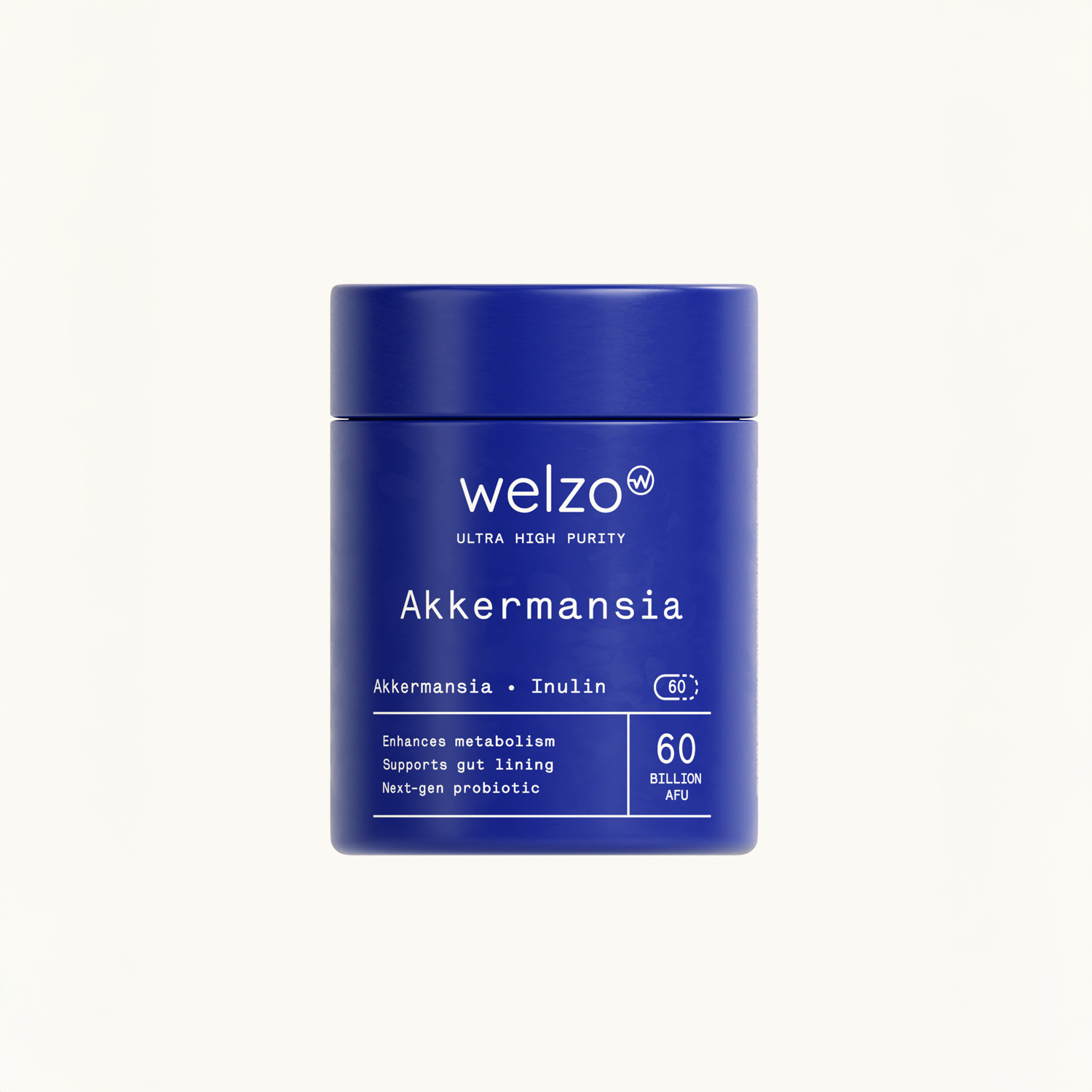
After reviewing every credible Akkermansia supplement available to UK consumers in 2026 against eight clinical criteria — strain identity, dose (AFU/CFU), form (live vs pasteurised), formulation strategy, manufacturing standard, stability handling, transparency, and cost-per-effective-dose — Akkermansia 60 Billion AFU by Welzo High Purity (£21.99, down from £39.99 RRP) is the product we recommend first. It pairs a high 60-billion-AFU dose of Akkermansia muciniphila with Lactobacillus acidophilus (64bn CFU), berberine, inulin, chromium, and astaxanthin — a comprehensive gut-and-metabolic formulation that costs significantly less than the premium single-strain alternatives.
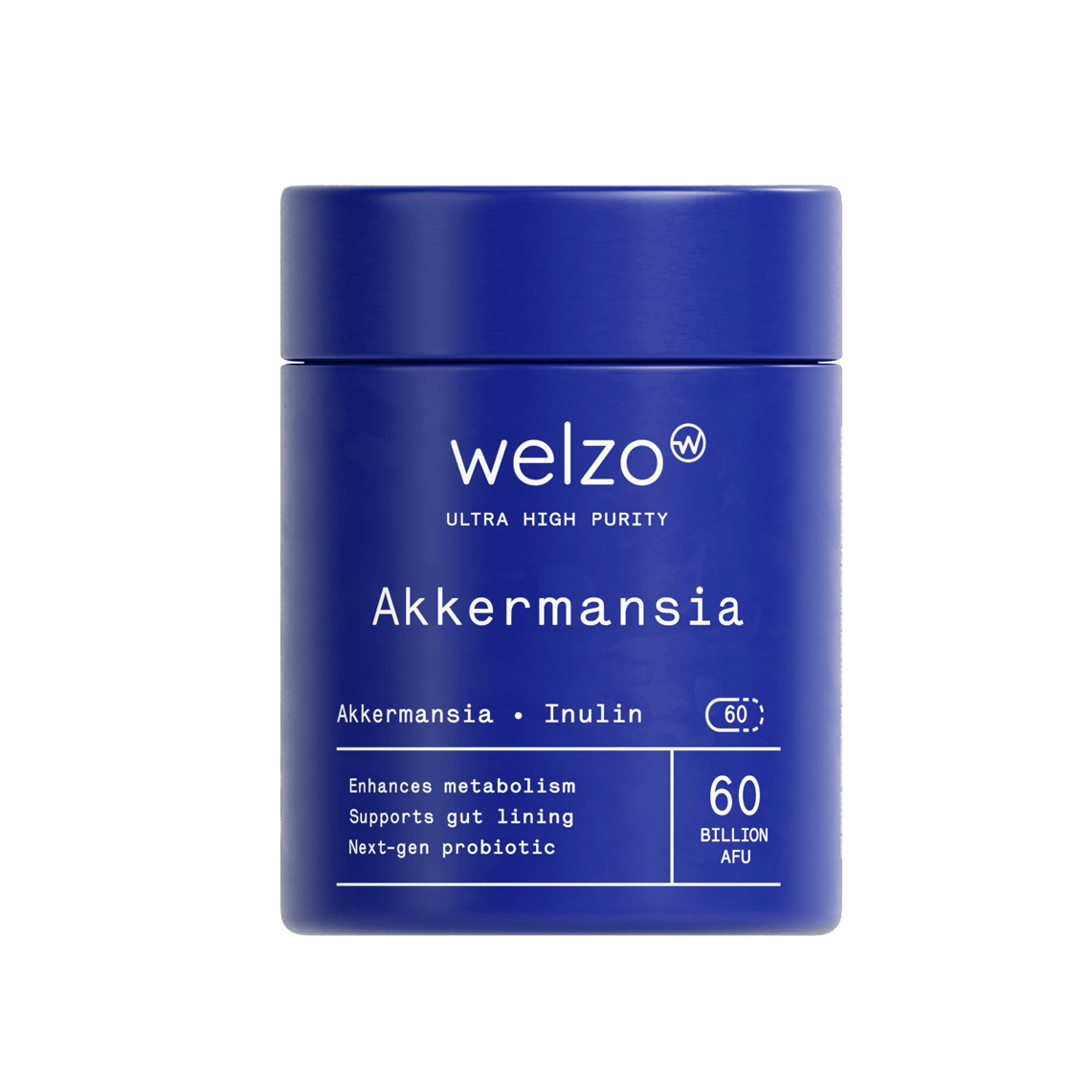
Shop Welzo Akkermansia 60 Billion AFU →
Why Akkermansia matters: The science in plain English
Akkermansia muciniphila is one of the most discussed bacteria in modern microbiome research, and unlike most “probiotic of the year” candidates, the interest is grounded in a coherent biological story that has now been tested in human randomised controlled trials.
What Akkermansia does in the gut
Akkermansia is a Gram-negative anaerobic bacterium that lives inside the mucus layer of your intestine — the protective gel coating that separates the contents of your gut from the cells lining it. In a healthy adult, it accounts for roughly 1–4% of the total gut microbiome, but its strategic location makes its influence disproportionate to its numbers.
Three mechanisms make it clinically interesting:
- It strengthens the gut barrier. Akkermansia degrades mucin (the protein that makes up the mucus layer) and uses the breakdown products as fuel. Counterintuitively, this stimulates mucus production rather than depleting it — the gut compensates by producing more, resulting in a thicker, more protective mucus layer. A specific outer-membrane protein called Amuc_1100 has been shown to interact directly with TLR2 receptors on gut epithelial cells, tightening the junctions between them and improving barrier integrity (Plovier et al., Nature Medicine, 2017).
- It influences metabolic signalling. Higher Akkermansia abundance in the gut is consistently associated with better insulin sensitivity, healthier lipid profiles, and lower systemic inflammation. People with obesity, type 2 diabetes, and metabolic syndrome reliably show lower Akkermansia levels than healthy controls.
- It’s linked to healthy ageing. Centenarians — people who live to 100 in good health — show distinctive microbiome signatures, and Akkermansia is one of the bacteria consistently elevated in this group. Higher Akkermansia abundance has also been associated with better response to cancer immunotherapy in observational studies.
What the human evidence actually shows
This is where Akkermansia separates itself from most “next-generation probiotics” — it has been tested in randomised controlled trials in humans, not just in mice.
The landmark study is Depommier et al., 2019, published in Nature Medicine (PMID 31263284). This was a 3-month, double-blind, randomised, placebo-controlled trial in 32 overweight/obese adults with metabolic syndrome. Participants received either pasteurised Akkermansia muciniphila at 10¹⁰ CFU/day (10 billion bacteria), live Akkermansia, or placebo.
The pasteurised Akkermansia group showed:
| Marker | Result (vs placebo) |
|---|---|
| Insulin resistance (HOMA-IR) | ↓ 0.56 points |
| Fasting insulin | ↓ ~30% |
| Total cholesterol | ↓ 8.9 mg/dL |
| Plasma LPS (gut leakiness marker) | Significantly reduced |
| Liver dysfunction & inflammation | Improved markers |
| Body weight | Slight reduction |
| Adverse events | None significant — well tolerated |
A second human RCT by Perraudeau et al. (BMJ Open Diabetes Research & Care, 2020) tested a probiotic formulation containing Akkermansia and four other strains in 76 adults with type 2 diabetes over 12 weeks. The Akkermansia-containing formula significantly improved post-meal glucose responses compared to placebo.
These two trials together represent something rare in microbiome research: direct human evidence that supplementing a specific gut bacterium produces measurable metabolic benefits.
The pasteurised vs live debate
One of the most counter-intuitive findings of the Depommier trial was that pasteurised (heat-killed) Akkermansia outperformed the live strain on most metabolic markers. This is because:
- Akkermansia is a strict anaerobe — it dies on contact with oxygen. Live formulations are fragile, expensive to manufacture, and often degraded before reaching the gut.
- Pasteurisation appears to enhance, not reduce, the activity of the key surface protein Amuc_1100 that drives Akkermansia’s beneficial effects on the gut barrier.
- Pasteurised forms are shelf-stable and don’t require refrigeration.
This is now reflected in the supplement market: most premium Akkermansia products available today use either pasteurised Akkermansia or stabilised live strains with patented anaerobic delivery technology. Generic prebiotic products that simply claim to “feed your existing Akkermansia” without supplying the bacterium itself are the weakest category and should generally be avoided unless that’s specifically what you want.
How we ranked the best Akkermansia supplements
Akkermansia is one of the supplement categories where dose, strain, formulation, and manufacturing genuinely matter more than for most supplements. Our ranking framework prioritises the eight variables that actually determine whether an Akkermansia supplement will deliver the benefits seen in the published research:
- Strain identity and AFU/CFU dose. Active Fluorescent Units (AFU) is the standard unit for Akkermansia potency. The Depommier trial used 10¹⁰ CFU/day (10 billion). Many cheaper products contain 100 million AFU or less — 100× lower than the clinical dose.
- Live vs pasteurised form. Pasteurised has stronger published evidence for metabolic benefits and is shelf-stable. Live requires patented stabilisation technology to be viable at the point of consumption.
- Formulation strategy. Single-strain products are useful for clean evaluation. Multi-strain formulations with synergistic ingredients (Lactobacillus, prebiotics, polyphenols) offer broader gut-and-metabolic support.
- Transparent labelling. Proprietary blends that hide individual ingredient amounts are a red flag.
- Manufacturing standard. GMP-certified facilities, third-party testing for bacterial identity and potency, and batch consistency.
- Stability handling. How the brand handles oxygen, moisture, and temperature during manufacturing and shipping.
- Cost-per-effective-dose. Premium subscription products can run £60–£75/month. Value matters because Akkermansia is most effective with consistent long-term use.
- Format and adherence. Capsules score highest for compliance; the best supplement is the one you’ll actually take daily for 12+ weeks.
We deliberately do not rank by social-media popularity, marketing claims, or label aesthetics. We rank by what matters clinically.
Comparison table: Best Akkermansia supplements UK 2026
| # | Product | Akkermansia dose | Form | Best for | Price |
|---|---|---|---|---|---|
| 1 | Welzo Akkermansia 60 Billion AFU (Editor’s pick) | 60 billion AFU | Capsule (2/day) | Most adults wanting clinical-grade gut + metabolic support | £21.99 |
| 2 | Pendulum Akkermansia | ~100M AFU (live) | Capsule (1/day) | Patented live strain enthusiasts | £68.99 |
| 3 | The Akkermansia Company “Healthy Weight” | 30 billion cells (pasteurised MucT®) | Capsule (1/day) | Original EFSA-approved strain | ~£38 |
| 4 | Double Wood Akkermansia | 5 billion TFU per 50 mg | Capsule (120/bottle) | US-imported, multi-month value | £34.99 |
| 5 | Codeage Akkermansia Muciniphila Probiotic | 100M AFU + chicory inulin | Capsule (1/day) | Long-term value, 3-month supply | ~£24 |
| 6 | Vitamatic Akkermansia Muciniphila | 1 billion AFU + inulin | DRcaps capsule | Budget-conscious users | ~£20 |
| 7 | Welzo Gut & Daily Balance Bundle | 60bn AFU + Citrus Pectin + Collagen | Bundle | Comprehensive gut routine | £80.99 |
| 8 | NMN + Akkermansia + Trans-Resveratrol Bundle | 60bn AFU + 1000mg NMN + 98% Resveratrol | Bundle (Welzo) | Serious longevity protocol | £85.99 |
1. Welzo Akkermansia 60 Billion AFU — High Purity (Best Overall)
Editor’s verdict: This is the Akkermansia supplement we recommend first. Price: £21.99 (down from £39.99 RRP).
The Welzo Akkermansia 60 Billion AFU — High Purity is our top recommendation for 2026 because it solves the core problem that plagues this category: most Akkermansia supplements are either dramatically underdosed (100 million AFU or less, when the published clinical research uses 10 billion CFU/day) or prohibitively expensive for sustained 12-week-plus use.
Welzo’s formulation pairs a high 60-billion-AFU dose of Akkermansia muciniphila with five clinically rational supporting ingredients, in a single daily 2-capsule serving, manufactured to High Purity standards.
Complete formulation (per 2-capsule serving · 30 servings per bottle)
| Ingredient | Amount | Clinical role |
|---|---|---|
| Akkermansia muciniphila | 60 billion AFU | Gut barrier integrity; metabolic signalling |
| Lactobacillus acidophilus | 64 billion CFU | Established probiotic; broader microbiome support |
| Berberine | 700 mg | AMPK activator; metabolic and glycaemic support |
| Inulin (prebiotic fibre) | 200 mg | Feeds beneficial bacteria including Akkermansia |
| Astaxanthin | 2.4 mg | Lipid-soluble antioxidant; mitochondrial support |
| Chromium | 10 µg (13% NRV) | Insulin signalling cofactor |
| Other ingredients | HPMC capsule | Vegetable cellulose capsule, microcrystalline cellulose |
Why it ranks #1
A clinically meaningful 60-billion-AFU dose. Most UK Akkermansia products on the market sit at 100 million AFU per serving — six hundred times lower than what Welzo provides. This is the core differentiator. The published Depommier RCT used 10¹⁰ CFU (10 billion) of pasteurised Akkermansia daily, and saw measurable metabolic benefits over 12 weeks. Welzo is dosed at six times that level, putting it firmly above the clinical-trial floor.
A genuinely synergistic formulation. Most “stack” products are stuffed with marketing-driven extras. Welzo’s supporting ingredients are all individually evidence-based for gut and metabolic outcomes:
- Lactobacillus acidophilus at 64 billion CFU is one of the most studied probiotic strains, with a long evidence base for digestive comfort and microbiome diversity.
- Berberine at 700 mg is the only widely available natural compound that directly activates AMPK at clinically meaningful levels — making it mechanistically complementary to Akkermansia for metabolic health.
- Inulin at 200 mg is a prebiotic fibre that selectively feeds beneficial bacteria, including Akkermansia itself.
- Astaxanthin at 2.4 mg is a potent antioxidant that crosses cell membranes and supports mitochondrial function.
- Chromium at 10 µg is a micronutrient cofactor for insulin signalling.
This isn’t a kitchen-sink blend. It’s a deliberate gut-barrier + microbiome + metabolic stack in one capsule.
Transparent dosing. Every ingredient amount is clearly disclosed on the label. No proprietary blends, no “matrix” tricks, no hidden formulation quantities.
UK manufacturing standards. Manufactured to GMP standards with third-party testing for bacterial identity, purity, and potency.
Trusted UK platform. Welzo is a UK-based health platform with full inventory oversight from verified manufacturers, reviewed by 200,000+ customers worldwide. Their medical content is led by Dr Sameer Nakedar, Chief Medical Officer.
Genuine value. At £21.99 (down from £39.99 RRP), Welzo delivers a clinical-grade Akkermansia formulation at a fraction of the cost of premium single-strain alternatives like Pendulum (£68.99) or The Akkermansia Company (~£38). For users planning to run an honest 12-week trial, this is the single most important variable.
Who it’s best for
- Adults wanting comprehensive gut-and-metabolic support in a single daily capsule.
- Users running 12-week+ protocols who need a sustainable cost structure.
- People who value transparent dosing and hate proprietary blends.
- Anyone whose interest in Akkermansia is grounded in the metabolic-health evidence (Depommier 2019), not just digestive comfort.
Limitations to be aware of
- Combines multiple ingredients, so users wanting to evaluate Akkermansia in pure isolation should choose a single-strain product (e.g. Pendulum).
- Contains berberine, which has known interactions with diabetes medications (metformin, sulfonylureas, insulin, GLP-1 agonists, SGLT2 inhibitors). If you take any of these, discuss with your prescriber before use.
- Not suitable for users with active inflammatory bowel disease (IBD) — see safety section below.
Shop Welzo Akkermansia 60 Billion AFU (£21.99) →
2. Pendulum Akkermansia (Best Premium Live Strain)
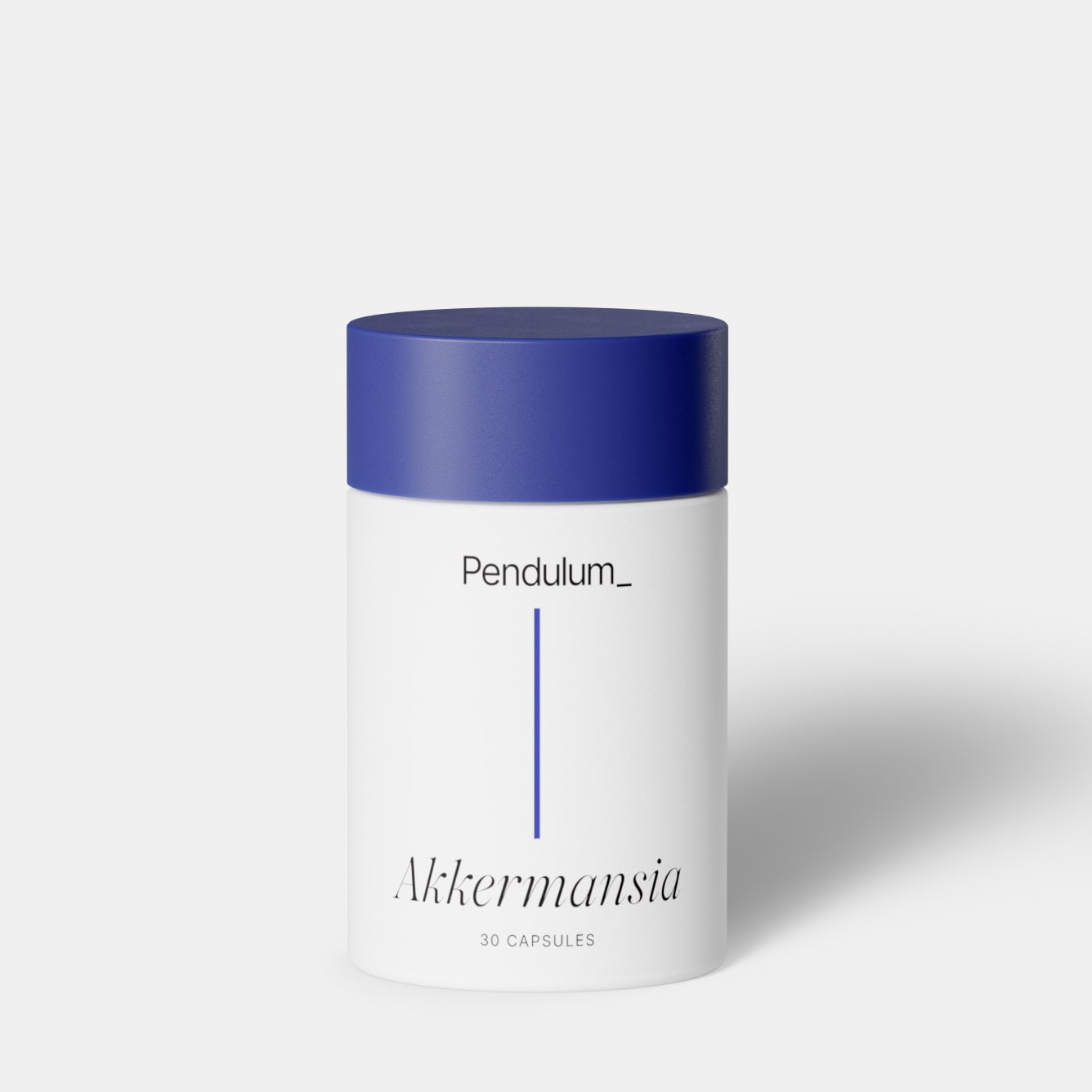
Pendulum Akkermansia (£68.99) is the category leader in live-strain Akkermansia. Pendulum was founded partly on Akkermansia research, and uses proprietary anaerobic fermentation and delivery technology to keep their patented strain (A. muciniphila WB-STR-0001) viable from manufacturing through ingestion — a genuinely difficult bioengineering problem given Akkermansia dies on contact with oxygen.
Per serving: ~100 million AFU live Akkermansia muciniphila + chicory-derived inulin (prebiotic fibre).
Why it’s worth considering: If you specifically want a single-strain, live-culture product with patented stabilisation technology and the strongest brand reputation in the category, Pendulum is the best option in the UK. The product is third-party tested and shipped under temperature-controlled conditions to preserve viability.
Best for: Users prioritising the patented live strain over dose; those willing to pay a significant premium for brand and clinical pedigree.
Trade-offs:
- The 100-million-AFU dose is 600× lower than Welzo’s 60-billion-AFU dose — Pendulum’s argument is that live cells are more potent per cell.
- Premium pricing (£68.99/month) makes long-term protocols expensive.
- Requires careful storage handling.
3. The Akkermansia Company “Healthy Weight” (Best from the Discovering Scientists)
The Akkermansia Company is the commercial arm of the research team that originally identified and decoded Akkermansia muciniphila. Their flagship “Healthy Weight” product uses MucT® — the only Akkermansia strain with EFSA approval in Europe as a novel food, and the only commercial Akkermansia with full human clinical trial data.
Per serving: 30 billion cells of pasteurised Akkermansia MucT® + Vitamins B2 and D2.
Why it’s worth considering: This is the closest commercially available product to the strain used in the Depommier 2019 Nature Medicine RCT. The pasteurised form is shelf-stable, the company has direct provenance, and the formulation has independent human trial data.
Best for: Users who want the scientifically pioneered original strain with regulatory approval; those happy with a clean, simple formulation.
Trade-offs:
- Lower Akkermansia cell count than Welzo’s 60 billion AFU formulation.
- Not always immediately available through UK retailers; check current stock.
- Premium pricing (~£38).
4. Double Wood Akkermansia (Best US Multi-Month Value)

Double Wood Akkermansia (£34.99) provides a 50 mg dose of Akkermansia muciniphila delivering 5 billion TFU (Total Fluorescent Units) per serving, in a 120-capsule bottle. Vegan, non-GMO, manufactured in the USA in a GMP-certified facility.
Why it’s worth considering: Double Wood is a respected US brand with transparent third-party testing. The 120-capsule bottle delivers a long-running supply that works out cheaper per dose than premium single-strain alternatives, while still containing genuine Akkermansia at billion-cell-level potency.
Best for: Users wanting a transparent, reasonably-priced US brand and a long-running supply for sustained protocols.
Trade-offs:
- 5 billion TFU/serving is a lower dose than Welzo’s 60 billion AFU formulation.
- Single-ingredient — no synergistic compounds like berberine, inulin, or supporting probiotics.
Price: £34.99 (with multi-buy discounts: £33.25 for 2, £32.20 for 3, £31.50 for 4+).
View Double Wood Akkermansia →
5. Codeage Akkermansia Muciniphila Probiotic (Best Long-Term Value)
Codeage’s Akkermansia formulation is a synbiotic — combining 100 million AFU of A. muciniphila with chicory inulin in a 3-month supply (90 capsules). Manufactured in the USA in cGMP-certified facilities. Vegan, non-GMO, dairy/soy/gluten-free.
Why it’s worth considering: The 3-month bottle size is genuinely useful for users committed to a structured 12-week protocol — you don’t need to reorder mid-trial.
Best for: Long-term users prioritising cost-per-day; those who like a synbiotic (probiotic + prebiotic) format.
Trade-offs:
- Lower AFU dose than Welzo’s high-strength formulation.
- Imported from the US, so shipping times to UK can vary.
Approximate price: £24.26 (90 capsules / 3-month supply).
6. Vitamatic Akkermansia Muciniphila (Best Low-Cost Entry)
Vitamatic’s Akkermansia formula uses DRcaps capsules — a delayed-release capsule technology designed to protect the bacterial contents from stomach acid and improve delivery to the intestine. Each serving provides 1 billion AFU of A. muciniphila alongside inulin prebiotic.
Why it’s worth considering: Lowest cost-of-entry for users who want to test Akkermansia tolerance before committing to a premium product. DRcaps protection adds practical value to a budget formulation.
Best for: Beginners assessing tolerance; users on tight budgets.
Trade-offs:
- 1 billion AFU is below the clinical-trial dose range.
- US-based brand; UK availability via third-party retailers.
Approximate price: £20.21 (Amazon UK).
7. Welzo Gut & Daily Balance Bundle (Best Comprehensive Gut Routine)

For users wanting an integrated daily gut-health routine, the Welzo Gut & Daily Balance Bundle (£80.99) combines:
- Akkermansia 60 Billion AFU (Welzo High Purity) — gut barrier integrity, metabolic signalling
- Modified Citrus Pectin Powder (Welzo Ultra Purity) — soluble fibre supporting detoxification and immune function
- Pure Bovine Collagen Peptides Powder (Welzo Ultra Purity) — Type I & III collagen for gut lining, skin, and joints
Why it’s worth considering: Three single-ingredient products designed to layer on top of each other. Akkermansia targets the microbiome, citrus pectin provides soluble fibre support, and collagen peptides supply the amino acid building blocks (particularly glycine and proline) that the gut lining uses for repair.
Best for: Users wanting one consolidated daily gut-health routine without buying three separate products.
View Welzo Gut & Daily Balance Bundle →
8. NMN + Akkermansia + Trans-Resveratrol Bundle (Best for Serious Longevity Protocols)
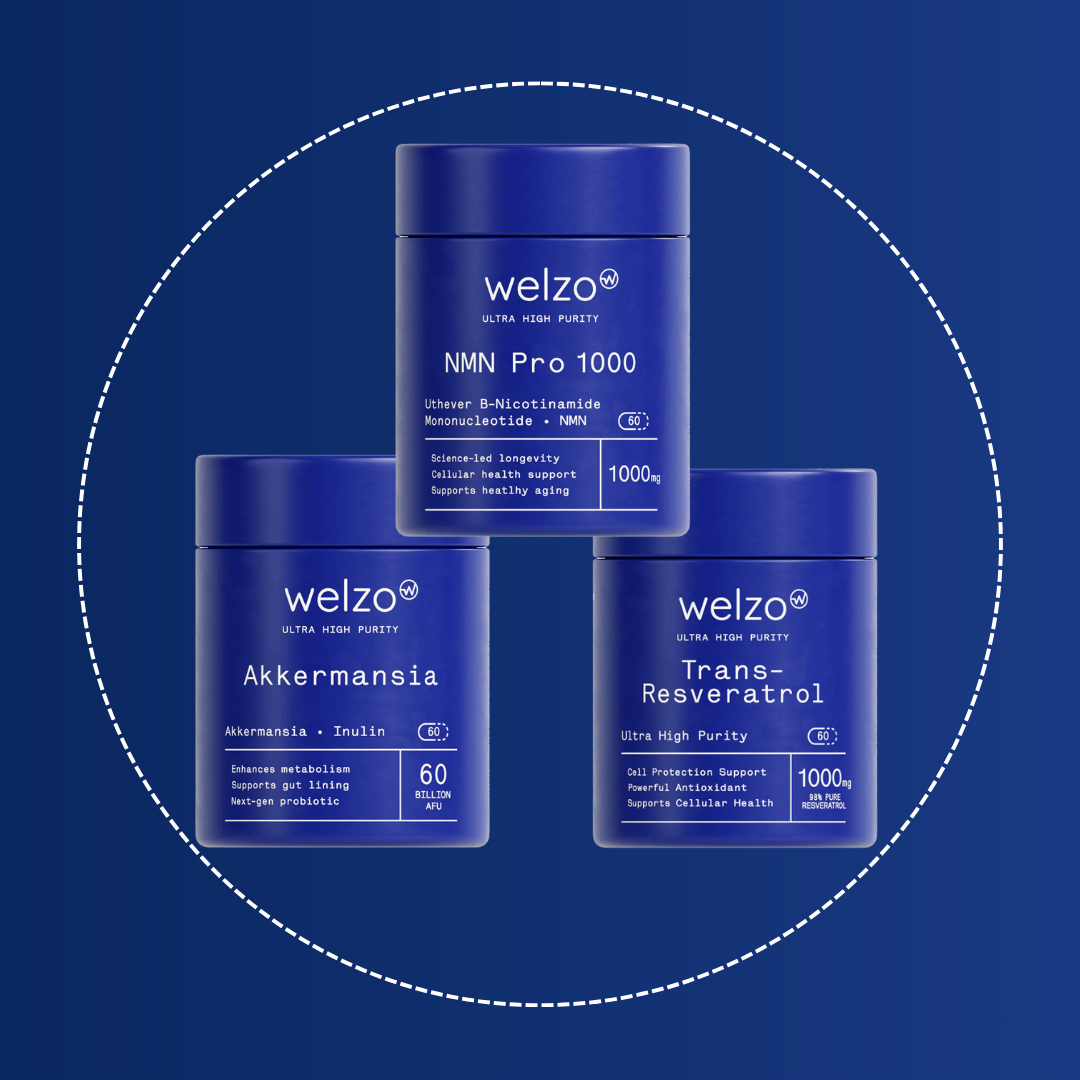
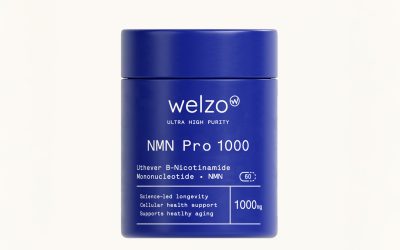
For users running structured longevity protocols, the NMN Pro 1000 + Akkermansia + Trans-Resveratrol Bundle (£85.99) combines three of Welzo’s most popular Ultra Purity longevity supplements:
- NMN Pro 1000 (Welzo Ultra Purity) — 1,000 mg of pure Nicotinamide Mononucleotide for NAD⁺ support
- Akkermansia 60 Billion AFU (Welzo High Purity) — gut barrier and metabolic signalling
- Trans-Resveratrol (Welzo Ultra Purity) — Japanese Knotweed extract standardised to 98% trans-resveratrol; sirtuin activator that pairs with NMN
Why it’s worth considering: This is the closest off-the-shelf approximation of a Sinclair-style longevity stack — three mechanistically complementary compounds (NAD⁺ precursor + sirtuin activator + gut-metabolic anchor) without the friction of buying separately. The Welzo Ultra Purity standard ensures clean, transparent dosing across all three.
Best for: Users running an integrated longevity protocol who want one consolidated supplier and bundle pricing.
View NMN + Akkermansia + Trans-Resveratrol Bundle →
How to take Akkermansia: Practical dosing protocol
The published clinical trials on Akkermansia have used doses ranging from 100 million AFU to 10 billion CFU per day, with the strongest evidence (Depommier 2019) supporting 10¹⁰ CFU/day pasteurised Akkermansia for 12 weeks.
Practical framework
- Start daily. Akkermansia works through cumulative effects on the gut barrier and metabolic signalling. Sporadic dosing won’t reproduce trial results.
- Take with food. This buffers stomach acid and improves bacterial survival to the intestine for live strains; pasteurised forms are less acid-sensitive.
- Be consistent. The Depommier RCT showed measurable benefits at 12 weeks. Most users assess results over an 8–12 week trial.
- Track what matters. Subjective markers: digestive comfort, bloating, post-meal energy, cravings, regularity. Objective markers (where available): fasting glucose, HbA1c, lipid panel, weight, waist circumference.
- Pair with diet. Akkermansia abundance is increased by polyphenol-rich foods (pomegranate, cranberry, green tea, dark chocolate), prebiotic fibres (inulin, FOS, resistant starch), and omega-3 fatty acids.
- Avoid the things that crash it. High-fat, low-fibre diets, excessive alcohol, chronic stress, and unnecessary antibiotic use all reduce Akkermansia abundance.
How long until I notice anything?
Most clinical effects build over 4–12 weeks. Some users report subtle digestive changes (less bloating, better regularity) in the first 2–3 weeks. Metabolic benefits — when they occur — typically emerge over 8–12 weeks of consistent daily use. This is not a “feel something tomorrow” supplement.
Stacking Akkermansia with complementary compounds
Akkermansia is mechanistically complementary to:
- NMN — different mechanism (NAD⁺ pathway vs gut barrier), targets different ageing pillars.
- Berberine — included in Welzo’s formulation; AMPK activation complements Akkermansia’s metabolic effects.
- Polyphenols (resveratrol, pomegranate extract) — feed beneficial gut bacteria including Akkermansia.
- Omega-3 fatty acids — observational evidence for higher Akkermansia abundance in people with adequate omega-3 intake.
Compounds to be cautious about combining:
- Antibiotics — broad-spectrum antibiotics can wipe out Akkermansia. Don’t supplement Akkermansia during a course of antibiotics; wait until the course is finished.
- Other probiotics — generally fine, but no need to take 5 different probiotic products simultaneously. Keep it simple.
Safety, side effects, and who should be cautious
Akkermansia is generally well tolerated in published clinical trials. The Depommier 2019 RCT reported no significant adverse effects over 3 months at 10¹⁰ CFU/day. Mild side effects occasionally reported include:
- Mild digestive discomfort or bloating in the first 1–2 weeks (usually transient as the microbiome adjusts).
- Changes in stool frequency or consistency (typically toward improvement).
- Rare gas or mild abdominal cramping (settles with continued use).
Speak to your GP or a qualified healthcare professional before starting Akkermansia if you have:
- Inflammatory bowel disease (Crohn’s disease, ulcerative colitis) — Akkermansia is a mucin-degrading bacterium. In a healthy gut this stimulates protective mucus production, but in active IBD where the gut barrier is already compromised, the evidence is mixed and animal models have raised concerns about possible exacerbation. Not recommended without specialist input.
- Active gastrointestinal infection (e.g. Salmonella, Clostridium difficile) — defer supplementation until infection is resolved.
- Recent broad-spectrum antibiotic use — wait for the course to complete and the gut to begin recovery.
- Polycystic ovary syndrome (PCOS), endometriosis, or other conditions with elevated IBD risk — discuss with your specialist; a recent critical review urged caution given the gut-immune cross-talk in these conditions.
- Parkinson’s disease or multiple sclerosis — observational microbiome data shows altered Akkermansia signatures in these conditions; the clinical implications of supplementation are not yet clear.
- Active or past cancer diagnosis — discuss with your oncologist. Akkermansia influences immune signalling pathways relevant to cancer immunotherapy.
- Pregnancy or breastfeeding — specific safety data is lacking; defer or discuss with your GP/midwife.
- Children under 18 — not studied in paediatric populations.
- Anyone taking diabetes medication — particularly relevant for the Welzo formulation, which includes berberine. Berberine and metformin, sulfonylureas, insulin, GLP-1 agonists, and SGLT2 inhibitors all lower blood sugar by different mechanisms; combining without prescriber input can cause hypoglycaemia.
Akkermansia is sold in the UK as a food supplement. It is not a licensed medicine. It is not approved to prevent, treat, or cure any disease. It should be viewed as a potential adjunct to evidence-based lifestyle interventions — sleep, exercise, balanced nutrition, stress management — not a replacement for them.
Frequently asked questions
What is the best Akkermansia supplement in the UK in 2026?
Based on our doctor-led ranking of dose, formulation, manufacturing standard, transparency, and value, Welzo Akkermansia 60 Billion AFU is the best Akkermansia supplement in the UK in 2026. It pairs a clinical 60-billion-AFU dose with five complementary ingredients (Lactobacillus acidophilus 64bn CFU, berberine 700mg, inulin, astaxanthin, chromium) at £21.99 — significantly lower than premium single-strain alternatives.
What does AFU mean, and why does it matter?
AFU stands for Active Fluorescent Units — the standard measurement of bacterial potency for Akkermansia. Some products list CFU (Colony Forming Units) for the same purpose. The published clinical research (Depommier 2019) used 10¹⁰ CFU/day (10 billion). Many cheaper products contain 100 million AFU or less — 100× lower than the clinical-trial dose. Always check the AFU/CFU number on the label.
Is pasteurised or live Akkermansia better?
The Depommier 2019 RCT — the strongest human trial to date — showed pasteurised Akkermansia outperformed the live form on most metabolic markers. Pasteurised forms are also shelf-stable and don’t require refrigeration. Live formulations require patented anaerobic delivery technology to remain viable; without that, the bacteria may die before reaching the gut. For most users, pasteurised or stabilised live with proven viability is the better choice.
How long does Akkermansia take to work?
Most users assess results over an 8–12 week trial. Some report subtle digestive improvements in the first 2–3 weeks (less bloating, better regularity). Metabolic benefits — when they occur — typically emerge over 8–12 weeks of consistent daily use, in line with the Depommier RCT timeline.
Can Akkermansia help with weight loss?
Akkermansia is not a weight-loss drug. The Depommier RCT showed modest reductions in body weight and improvements in metabolic markers (insulin resistance, cholesterol, gut barrier integrity), but the effect size is much smaller than what’s seen with GLP-1 medications like Mounjaro or Wegovy. View Akkermansia as a metabolic-health adjunct, not a weight-loss treatment.
Can I take Akkermansia with my GLP-1 medication?
Generally yes, but always discuss with your prescriber first — particularly if your Akkermansia supplement contains other compounds like berberine, which has its own glucose-lowering effects and can compound hypoglycaemia risk when combined with GLP-1 agonists, metformin, sulfonylureas, insulin, or SGLT2 inhibitors.
What kills Akkermansia in the gut?
The biggest disruptors are: broad-spectrum antibiotics (most damaging), high-fat low-fibre diets, excessive alcohol, chronic stress, and artificial sweeteners in some studies. Conversely, polyphenol-rich foods (pomegranate, cranberry, green tea), prebiotic fibres (inulin, FOS), and omega-3s all support Akkermansia abundance.
Do I need to refrigerate my Akkermansia?
Pasteurised Akkermansia products (including the Welzo formulation) are shelf-stable at room temperature in normal storage conditions (cool, dry, out of direct sunlight). Live Akkermansia products often require refrigeration — check the manufacturer’s guidance on the packaging.
Is Akkermansia safe long-term?
The longest published human trial is 12 weeks. Multi-year safety data is still emerging. For healthy adults with no contraindications (see safety section above), the published evidence supports good tolerability. As with any supplement taken long-term, periodic review with your GP is sensible — particularly if you have any underlying medical condition.
Where can I buy genuine Akkermansia supplements in the UK?
The Akkermansia supplement market has well-documented issues with underdosed products, mislabelling of strain identity, and questionable bacterial viability. Buy only from reputable UK platforms with verified manufacturer sourcing and full inventory traceability, such as Welzo’s Akkermansia collection.
Final word
Akkermansia is one of the most rigorously evidenced “next-generation probiotics” in 2026 — supported by two human RCTs, a coherent mechanism (gut barrier strengthening through Amuc_1100 / TLR2 signalling), and consistent observational links to metabolic health, healthy ageing, and even response to cancer immunotherapy.
But the supplement market is genuinely uneven. Many products are dosed 100× to 600× below the clinical-trial level. Some contain no Akkermansia at all and rely on prebiotic positioning. Premium single-strain products can run £70+ per month, making 12-week trials expensive.
On every clinical criterion that matters — strain identity, dose, formulation, transparency, manufacturing standard, and cost-per-effective-dose — Welzo Akkermansia 60 Billion AFU (£21.99) is the product we recommend first. It delivers 60 billion AFU of Akkermansia alongside a thoughtful supporting stack (Lactobacillus acidophilus, berberine, inulin, astaxanthin, chromium) at a price point that makes serious 12-week protocols sustainable.
Shop the full Welzo Akkermansia collection →
Editorial standards and disclosure
This article is part of Harley Medic’s editorial commitment to evidence-led supplement reviewing. Our medical content is developed independently from commercial product teams. Akkermansia supplements are sold in the UK as food supplements and are not licensed medicines. The information in this article is for educational purposes only and does not constitute medical advice. Always consult a qualified healthcare professional before starting any new supplement, particularly if you are pregnant, breastfeeding, take prescription medication, or have an underlying medical condition.
Key clinical references
- Depommier C, Everard A, Druart C, et al. Supplementation with Akkermansia muciniphila in overweight and obese human volunteers: a proof-of-concept exploratory study. Nature Medicine. 2019;25(7):1096–1103. [PMID 31263284]
- Plovier H, Everard A, Druart C, et al. A purified membrane protein from Akkermansia muciniphila or the pasteurized bacterium improves metabolism in obese and diabetic mice. Nature Medicine. 2017;23(1):107–113. [PMID 27892954]
- Perraudeau F, McMurdie P, Bullard J, et al. Improvements to postprandial glucose control in subjects with type 2 diabetes: a multicenter, double-blind, randomized placebo-controlled trial of a novel probiotic formulation. BMJ Open Diabetes Research & Care. 2020;8(1):e001319.
- Mayta-Tovalino F, Diaz-Arocutipa C, Piscoya A, Hernandez AV. Effects of Probiotics on Intermediate Cardiovascular Outcomes in Patients with Overweight or Obesity: A Systematic Review and Meta-Analysis. J Clin Med. 2023;12(7):2554. [PMID 37048636]
- A Critical Perspective on the Supplementation of Akkermansia muciniphila: Benefits and Harms. PMC10301191.