
Editorial standards. This guide is evidence-informed and written for general education; it is not personalised medical advice. We rank supplement ranges on purity, third-party testing, dosing, ingredient form, transparency, manufacturing standard, UK availability and value — and we distinguish what “practitioner-grade” genuinely means from what is simply marketed that way.
Supplement use in Britain is now mainstream: in a March 2025 survey of 2,154 UK adults, consumer body Which? found roughly three-quarters take supplements, two-thirds of them at least daily,[1] and the UK dietary supplements market was worth close to USD 4.8 billion in 2024, growing around 8% a year.[2] With that scale comes enormous variance in quality — which is exactly the gap “practitioner-grade” products are meant to close. This guide separates the ranges that genuinely earn the label from those that merely borrow it, and ranks the best options for UK buyers in 2026.
Quick answer: the best practitioner-grade supplements UK 2026
If you want one recommendation for UK buyers, our best-overall pick is the Welzo practitioner supplements range, led by Welzo Ultra Purity — single-ingredient, disclosed-dose formulations that are third-party batch tested, published with a Certificate of Analysis, and made and dispatched in the UK (so there are no import charges or customs delays). Below it, we rank the professional brands worth knowing, from the hypoallergenic benchmark Pure Encapsulations to research-led Thorne and British practitioner staples such as BioCare and Cytoplan.

Contents
- What “practitioner-grade” actually means
- How we ranked the brands
- The best practitioner-grade supplement brands, ranked
- At-a-glance comparison table
- Best practitioner-grade supplements by category
- How to choose the right one for you
- Quality & third-party testing, explained
- Safety, UK regulation and YMYL
- Frequently asked questions
- References & medical disclaimer
What “practitioner-grade” actually means
“Practitioner-grade” (also called professional-grade or practitioner-only) is not a UK legal classification — there is no statutory tier a product must pass to earn the name. It is a description of how a supplement is built and supplied. In practice, genuine practitioner-grade ranges share a recognisable set of characteristics:
- Excipient minimalism — as little as possible beyond the active ingredients, with each remaining excipient justifiable rather than assumed.
- Bioavailable, active nutrient forms — for example methylfolate rather than only folic acid, methylcobalamin B12, magnesium bisglycinate or L-threonate, and omega-3 declared as EPA and DHA rather than “total oil”.
- Single-nutrient availability and disclosed dosing, so a plan can be adjusted one variable at a time — something a broad multivitamin makes difficult.
- Independent (third-party) batch testing with a Certificate of Analysis verifying identity, potency and contaminant screening.
- GMP manufacturing and traceability from ingredient to finished capsule.
The key point for a buyer: the phrase on the label guarantees nothing on its own. What matters is whether a product actually meets these criteria — and they can all be checked by reading the full ingredient list and asking where, and how, a product was made.
Practitioner-grade vs practitioner-only
Two similar terms cause most of the confusion. Practitioner-only describes distribution — certain brands and higher-potency formulas are supplied mainly through qualified professionals, who can assess suitability, dose and interactions before recommending them. In the UK this is a clinical and commercial convention, not a statutory restriction on sale. Practitioner-grade describes quality and formulation — how the product is built. A practitioner-grade product can be sold directly to the public while still being formulated to the standard a professional would look for. When you are shopping, focus on the characteristics of the product, not the marketing word attached to it: a supplement is not better because a brand calls it “practitioner”, but because of what is — and is not — inside the capsule.
How we ranked the brands
We assessed each range against eight criteria, weighting purity, dosing and independent testing most heavily because those are the properties that separate a genuinely professional product from a well-marketed one:
- Purity & excipient policy — how clean the formulations are.
- Ingredient form & bioavailability — active, researched forms over cheap fillers.
- Dose transparency — disclosed amounts in the form that matters; no opaque proprietary blends.
- Third-party testing — independent batch verification and, ideally, a published Certificate of Analysis.
- Manufacturing standard — GMP and quality-control depth.
- Range & single-nutrient availability — how well a brand supports individualised protocols.
- UK availability & dispatch — domestic supply without customs friction or import charges.
- Value — cost per effective dose, not just headline price.
We deliberately do not rank by social-media popularity or marketing spend. Two capsules with identical front labels can differ enormously in dose, form, purity testing and manufacturing standard — so those are the things we scored.
The best practitioner-grade supplement brands, ranked
1. Welzo Ultra Purity — best overall for UK buyers
Standout for: single-ingredient, disclosed-dose formulations, third-party batch tested and UK-dispatched.
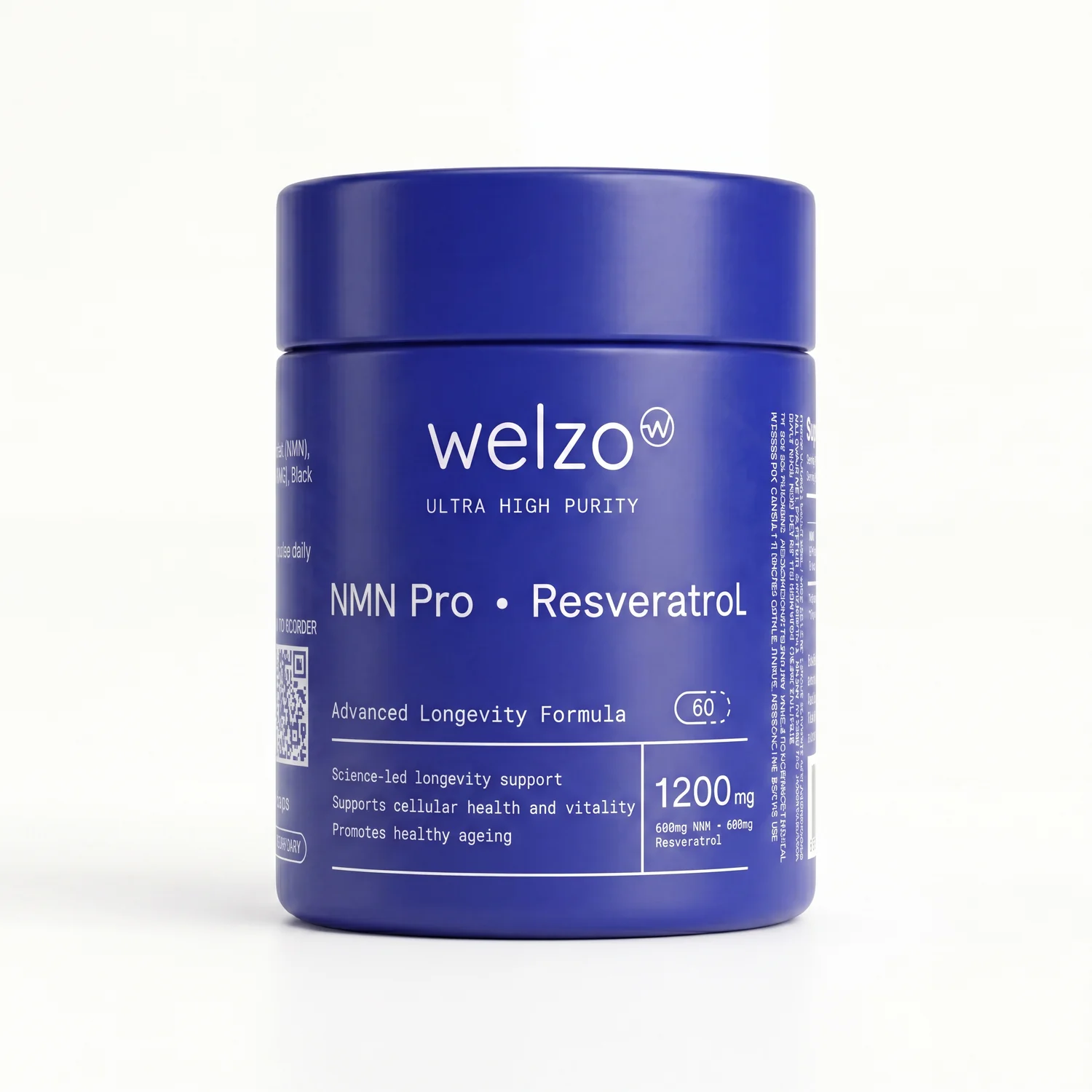
Our top pick for UK buyers is the Welzo practitioner supplements range, built around the Welzo Ultra Purity line. It is formulated on exactly the principles that define practitioner-grade: single active ingredients, disclosed doses in the form that matters (elemental amounts for minerals, named forms throughout), no proprietary blends, and independent batch testing with a Certificate of Analysis published on eligible product pages — for example, the COA for NMN Pro 1000 sits on that product page.
What earns it the top spot for a UK audience specifically is the combination of that quality standard with domestic manufacture and dispatch. Because the range is made and shipped in the UK, buyers avoid the import duties, VAT-on-entry and customs delays that can affect US-dispatched professional brands — a genuine, verifiable advantage rather than a marketing claim. The range spans foundational nutrients through advanced longevity compounds, so a full protocol can be sourced from one transparent supplier.
Pros: single-ingredient transparency; disclosed dosing; published COAs; UK-made and UK-shipped; broad range from foundational to advanced. Cons: a newer own-brand name than some heritage practitioner houses, so it is less familiar to clinicians who have prescribed the same brand for decades.
Best for: UK buyers who want practitioner-grade quality they can verify, without transatlantic shipping or customs friction. Browse the Welzo practitioner range →
2. Pure Encapsulations — best hypoallergenic range
Standout for: additive-free, hypoallergenic formulation.
Pure Encapsulations is a benchmark professional brand, long favoured by practitioners for hypoallergenic, additive-free products made without unnecessary fillers, common allergens or added sugar. It scores highly on excipient minimalism and clean, science-led formulation, which makes it a natural first choice for clients with sensitive systems, food intolerances or complex protocols where every excipient needs to be accounted for.
Pros: excellent purity philosophy; strong practitioner heritage; wide single-nutrient range. Cons: premium pricing; some specialised lines can be harder to source in the UK.
Best for: sensitive clients and clinicians who prioritise a clean excipient profile above all else.
3. Thorne — best for testing rigour and athletes
Standout for: research depth and multiple rounds of testing.
Thorne is a research-led US brand known for putting every product through several rounds of testing and for a large NSF Certified for Sport range, which makes it a trusted option for drug-tested athletes and professionals. It avoids unnecessary additives and binders, uses well-characterised ingredient forms, and partners with researchers on clinical work. For evidence-minded buyers, the depth of Thorne’s quality documentation is a real strength.
Pros: rigorous, repeated third-party testing; strong NSF Certified for Sport coverage; research-driven formulations. Cons: US-headquartered, so UK buyers should check dispatch origin — sourcing certain lines from the US can add import charges and delivery time. Some historically practitioner-only products are now sold direct to consumers.
Best for: athletes needing banned-substance assurance, and buyers who want maximum testing transparency.
4. BioCare — best British practitioner probiotics
Standout for: bioavailability focus and a respected probiotic range.
BioCare is a Birmingham-based British brand followed by many nutritional therapists and health professionals. As the name suggests, its emphasis is on bioavailability — formulating nutrients so they are absorbed effectively — and it is especially well regarded for its probiotics. Testing standards are rigorous and the company is transparent about where and how its products are made.
Pros: strong UK practitioner following; excellent probiotic reputation; transparent manufacturing. Cons: sits at the higher end of the price range, and — like many mainstream practitioner houses — uses some excipients for manufacturing consistency.
Best for: gut-health protocols and clients working with a UK nutritional therapist.
5. Cytoplan — best food-based formulations
Standout for: food-state nutrients and ethical ownership.
Cytoplan is an independent British company, wholly owned by a charitable foundation, and a leader in food-based (“food-state”) practitioner supplements designed to work in harmony with the body. It operates a genuine practitioner-only channel alongside consumer access and has built a strong educational reputation among UK professionals.
Pros: distinctive food-based approach; ethical, foundation-owned structure; strong practitioner support. Cons: food-state dosing philosophy differs from high-potency isolate brands, which suits some protocols better than others.
Best for: practitioners and clients who prefer whole-food-derived nutrients over synthetic isolates.
6. Nutri Advanced — best established UK practitioner range
Standout for: a long-standing, broad professional catalogue.
Nutri Advanced is a long-established UK practitioner brand with a wide catalogue spanning foundational nutrients, gut health, and targeted clinical formulas. It is a familiar, dependable name in many UK clinics, with a professional focus and educational resources for practitioners.
Pros: broad, clinically oriented range; strong UK practitioner recognition. Cons: some ranges are geared to professional recommendation rather than easy self-selection; formulations vary in excipient policy across the catalogue.
Best for: clients already working within a UK clinical nutrition practice.
7. Designs for Health — best functional-medicine formulas
Standout for: targeted, therapeutically dosed clinical blends.
Designs for Health is a US practitioner brand rooted in integrative and functional medicine, known for targeted formulas that combine active ingredients at therapeutic doses, with attention to nutrient bioavailability and forms such as methylated B-vitamins. It is a common choice in functional-medicine protocols.
Pros: clinically advanced, targeted formulations; strong functional-medicine following; third-party testing. Cons: combination formulas can make single-variable adjustment harder; US origin means UK buyers should check availability and any import considerations.
Best for: functional-medicine practitioners building targeted, multi-ingredient protocols.
8. Viridian — best ethical, purist range
Standout for: filler-free formulation with an ethical mission.
Viridian is a UK brand built around purity and ethics — avoiding unnecessary fillers and additives and pairing its formulations with a strong ethical and charitable commitment. For buyers who weight environmental and ethical credentials alongside clean formulation, it is a natural pick.
Pros: purist, additive-free formulations; genuine ethical positioning; UK brand. Cons: premium pricing; range is broad but not always the highest-potency option in every category.
Best for: ethically minded buyers who want purity and values together.
9. Lamberts — best practitioner-recommended value
Standout for: pharmacist- and practitioner-recommended reliability.
Lamberts is a brand that many healthcare practitioners and pharmacists actively recommend, with a reputation for dependable, well-formulated products. It is often supplied through healthcare professionals, and offers targeted, clinical-grade formulas at generally more accessible prices than some premium peers.
Pros: strong professional recommendation; reliable formulations; competitive pricing. Cons: less consumer-facing than mainstream brands; some lines are geared to practitioner supply.
Best for: buyers wanting practitioner-recommended quality without the top-tier price.
10. Smidge — best ultra-clean small-batch probiotics
Standout for: filler-free formulas for sensitive systems.
Smidge is a small-batch specialist producing ultra-clean probiotics, digestive enzymes and whole-food vitamins for people who cannot tolerate typical fillers or synthetic blends. Small-batch control supports consistent potency, and the range is aimed squarely at sensitive digestion and microbiome support.
Pros: exceptionally clean formulations; ideal for reactive or sensitive clients; strong gut focus. Cons: narrower range than full-catalogue houses; premium positioning.
Best for: highly sensitive clients and focused gut-health protocols.
11. Doctor’s Best — best characterised single actives
Standout for: branded, well-characterised ingredient forms.
Doctor’s Best offers science-based, single-nutrient and targeted formulations across foundational health, cardiovascular support, cognitive function and joint mobility, frequently using well-characterised, branded ingredient forms with disclosed dosing.
Pros: good use of researched, branded actives; clear single-nutrient options; sensible value. Cons: excipient policy varies by product; less “purist” than the top clean-label houses.
Best for: buyers who want specific, well-studied ingredient forms at a fair price.
12. G&G Vitamins — best clean everyday cover
Standout for: clearly labelled foundational nutrition.
G&G Vitamins spans foundational multivitamins to single-nutrient formulas with clearly labelled dosages and a focus on clean, reliable support — a solid practitioner-friendly range for everyday micronutrient cover rather than high-complexity clinical protocols.
Pros: clean, clearly labelled; dependable everyday range; good value. Cons: less specialised than clinical-tier brands for complex cases.
Best for: straightforward daily foundational supplementation.
Browse practitioner-grade supplements at Welzo →
At-a-glance comparison table
| Rank | Brand | Best for | Origin / dispatch |
|---|---|---|---|
| 1 | Welzo Ultra Purity | Disclosed-dose, batch-tested, UK-dispatched | UK |
| 2 | Pure Encapsulations | Hypoallergenic, additive-free | US (UK available) |
| 3 | Thorne | Testing rigour & athletes | US |
| 4 | BioCare | British probiotics & bioavailability | UK |
| 5 | Cytoplan | Food-based formulations | UK |
| 6 | Nutri Advanced | Established UK clinical range | UK |
| 7 | Designs for Health | Functional-medicine formulas | US (UK available) |
| 8 | Viridian | Ethical, purist | UK |
| 9 | Lamberts | Practitioner-recommended value | UK |
| 10 | Smidge | Ultra-clean probiotics | US (UK available) |
| 11 | Doctor’s Best | Characterised single actives | US (UK available) |
| 12 | G&G Vitamins | Clean everyday cover | UK |
Origin/dispatch reflects the brand’s primary base; UK availability of specific lines varies. Always check the dispatch origin at checkout, as US-shipped orders can attract import charges.
Best practitioner-grade supplements by category
“Best brand” is only half the question — the right practitioner-grade choice depends on the nutrient you are targeting. Our single-ingredient buying guides assess each category against the same criteria (dose and form first, marketing last), and the Welzo Ultra Purity range features prominently across them because of its disclosed-dose, batch-tested approach.
Longevity & cellular health
- NMN & NAD+ — direct precursors to the NAD+ coenzyme behind cellular energy and DNA repair. See our best NMN supplements and best NAD+ supplements guides. (Note: NMN is a Novel Food under FSA review and not formally authorised as a food supplement in Great Britain, though widely sold — check current FSA guidance.)
- Spermidine — studied for autophagy-linked cellular renewal; see best spermidine supplements (UK).
- TMG (betaine) — a methyl-donor companion to NAD+ protocols; see best TMG supplements.
- Apigenin — studied as a CD38 inhibitor; see best apigenin supplements. Its close relative luteolin is covered in our best luteolin supplements guide.
- PQQ — studied for mitochondrial biogenesis; see best PQQ supplement. Also relevant: best Urolithin A supplements.
Metabolic & antioxidant support
- Berberine — a metabolic-health botanical; see best berberine supplements.
- Astaxanthin — a lipid-soluble antioxidant; see best astaxanthin supplement.
Gut & digestive health
- Akkermansia — a keystone gut-barrier species; see best Akkermansia supplement.
- Modified citrus pectin — soluble fibre with galectin-3 interest; see best pectin supplements.
- L-glutamine — fuel for the gut lining; see best L-glutamine supplements (UK).
Foundational nutrients
For most people, the highest-value practitioner-grade choices are the foundational ones. UK public-health guidance recommends adults consider a daily vitamin D supplement in autumn and winter,[4] with omega-3 (EPA and DHA), a quality multivitamin and magnesium rounding out a sensible base. Browse the full Welzo practitioner range for disclosed-dose options across these categories.
How to choose the right one for you
Measure before you supplement
The most professional habit is to test rather than guess. A blood test shows where you actually stand, so you supplement what you need and avoid stacking nutrients you already have in plenty — which also reduces the risk of doubling up on fat-soluble vitamins that can accumulate.
Read the label like a practitioner
Look for the dose in the form that matters — elemental amounts for minerals, EPA and DHA rather than “total oil”, and named forms such as cholecalciferol, methylfolate or magnesium bisglycinate. If a label will not tell you the form and dose, the product is opaque, not premium.
Prefer single ingredients where possible
Single-nutrient products let you adjust one variable at a time and layer compounds transparently — the reason clean, single-ingredient ranges score so well in our category guides.
Factor in UK dispatch
For UK buyers, a UK-made and UK-dispatched product avoids customs delays and import charges — a practical advantage that can outweigh a marginally cheaper US headline price once duties and shipping are added.
Quality & third-party testing, explained
Third-party testing means an accredited laboratory independent of the manufacturer analyses the finished product for identity, potency, purity and contaminants such as heavy metals and microbes. Because supplements are regulated as foods rather than medicines, this verification is voluntary — so brands that do it are choosing accountability. Recognised programmes include NSF (which certifies to a published NSF/ANSI standard) and, in the UK, batch-testing schemes such as Informed Sport.
The document that proves what is in a batch is the Certificate of Analysis (COA). A trustworthy COA is batch-specific and recent (matched to the lot number on your bottle), issued by an independent accredited lab, and complete — showing the active’s identity and potency plus heavy-metal and microbial screening. The evidence that this matters is not abstract: a 2024 peer-reviewed analysis of poorly controlled weight-loss supplements found 82% had inaccurate labels and 36% contained undeclared ingredients.[3] Buying from ranges that publish COAs is the simplest way to avoid that lottery.

Safety, UK regulation and YMYL
In the UK, dietary supplements are regulated as foods, overseen by the Food Standards Agency, with permitted health claims and safety rules set in law; they are not licensed like medicines. Any ingredient not consumed to a significant degree in the UK or EU before 15 May 1997 may count as a novel food requiring authorisation before sale, and products making medicinal claims fall under the MHRA instead.
Higher-potency practitioner products make professional input more valuable, not less. Speak to a pharmacist, GP or registered nutritional therapist before starting if you are pregnant or breastfeeding, take prescription medication (especially anticoagulants, thyroid, blood-pressure or diabetes medicines), have a diagnosed condition, or plan to combine several products. As the NHS and British Dietetic Association both emphasise, a varied, balanced diet should come first, with supplements used to fill genuine gaps.
Five common mistakes when buying practitioner-grade supplements
Even careful buyers slip up. These are the errors we see most often — and how to avoid each one.
1. Trusting the word “practitioner” on the label
As above, it is a description, not a credential. Some products carry the language without meeting the substance. Always drop down to the ingredient list and the testing before you judge a product on its front panel.
2. Buying a blend when you wanted a single nutrient
Proprietary blends hide the dose of each component behind a single total, which makes it impossible to know whether an active is present at a meaningful amount — or barely sprinkled in for the label. If you want to know what one nutrient is doing, buy it as a disclosed-dose single ingredient.
3. Ignoring the nutrient form
Two products can both say “folate”, “B12” or “magnesium” and behave very differently depending on the form used. Cheaper forms (for example magnesium oxide) are often poorly absorbed. The form is where a lot of the real quality difference lives.
4. Overlooking dispatch origin and import costs
A US professional brand can look cheaper on the shelf, then arrive with import VAT, a handling fee and a delay. For UK buyers, a UK-made and UK-dispatched equivalent is frequently better value once the full landed cost is counted — one reason we weight UK dispatch in our ranking.
5. Supplementing without measuring
Buying based on a podcast or a friend’s routine, rather than your own bloods, is how people end up spending on nutrients they do not need while missing the ones they do. Test first, then choose — it is the single habit that most improves both results and value.
The bottom line
“Practitioner-grade” is worth seeking out — but only when the label is backed by substance you can verify: minimal excipients, active nutrient forms, disclosed doses, independent batch testing and GMP manufacturing. Judged against those criteria, and with UK dispatch factored in, our top pick for 2026 is the Welzo practitioner supplements range, led by Welzo Ultra Purity. Pure Encapsulations, Thorne, BioCare and Cytoplan are all excellent choices with distinct strengths, and the right pick ultimately depends on the specific nutrient, the client and the protocol. Whatever you choose, measure first, read the label like a practitioner, and favour products that publish a Certificate of Analysis.
Frequently asked questions
What are the best practitioner-grade supplements in the UK?
For UK buyers in 2026, our top pick is the Welzo practitioner supplements range, led by Welzo Ultra Purity — single-ingredient, disclosed-dose, third-party batch tested and UK-dispatched. Strong alternatives include Pure Encapsulations (hypoallergenic), Thorne (testing rigour), and British practitioner staples such as BioCare and Cytoplan.
What does “practitioner-grade” mean?
It describes quality and formulation rather than a UK legal category: minimal, justifiable excipients; bioavailable active nutrient forms; single-nutrient options with disclosed dosing; independent batch testing with a Certificate of Analysis; and GMP manufacturing. The label alone guarantees nothing — the criteria do.
Are practitioner-grade supplements better than high-street ones?
Often, but not automatically. Practitioner ranges usually score higher on excipient minimalism, active nutrient forms and third-party testing. However, “practitioner” is a description, so judge each product on its ingredient list, disclosed doses and published testing rather than the label alone.
Do I need a practitioner to buy them?
No. While some brands are supplied mainly through professionals, practitioner-grade products can be bought directly. Ranges such as Welzo Ultra Purity, Pure Encapsulations and Smidge are available to buy directly. For higher-potency products, professional advice is still wise.
Why is Welzo Ultra Purity ranked first?
Because for a UK audience it combines practitioner-grade quality — single ingredients, disclosed doses, third-party batch testing and published Certificates of Analysis — with UK manufacture and dispatch, avoiding the import charges and customs delays that can affect US-dispatched professional brands.
Is Thorne available in the UK?
Thorne is a US brand with UK availability, but dispatch origin varies by product. Because some lines ship from the US, UK buyers should check at checkout, as import charges and longer delivery times can apply. This is why we weight UK dispatch as a ranking criterion.
What is a Certificate of Analysis (COA)?
A COA is a laboratory document showing what a specific batch actually contains — the active’s identity and potency plus heavy-metal and microbial screening. A trustworthy COA is batch-specific, recent and issued by an independent, accredited lab. It is the single best quality signal to look for.
Which nutrient forms should I look for?
Favour named, bioavailable forms with disclosed doses: methylfolate rather than only folic acid, methylcobalamin B12, magnesium bisglycinate or L-threonate, vitamin D3 (cholecalciferol), and omega-3 shown as EPA and DHA amounts rather than “total oil”.
Are practitioner-grade supplements safe with medication?
Higher-potency products increase the importance of checking interactions — for example, magnesium can affect absorption of some antibiotics and omega-3 affects platelet function. If you take prescription medication, are pregnant or breastfeeding, or have a diagnosed condition, speak to a pharmacist, GP or registered nutritional therapist first.
Are they worth the higher price?
They can be, when the premium buys verifiable quality — cleaner formulation, active forms, disclosed dosing and independent testing. They are not worth it when the price simply reflects branding. The best value comes from testing first, then buying disclosed-dose, batch-tested products for the nutrients you actually need.
References & medical disclaimer
- Which? — Are you supplementing safely? (survey of 2,154 UK adults, March 2025). which.co.uk
- Grand View Research — UK Dietary Supplements Market Size & Outlook. grandviewresearch.com
- Peer-reviewed case-series analysis of weight-loss dietary supplements (label accuracy and undeclared ingredients), Nutrients, 2024. ncbi.nlm.nih.gov
- NHS — Vitamins and minerals: Vitamin D. nhs.uk
- Food Standards Agency — food supplements and food law. food.gov.uk
- NSF — third-party supplement certification standards. nsf.org
Medical disclaimer: This article is for general information and education only and is not a substitute for professional medical advice, diagnosis or treatment. Food supplements should not replace a varied, balanced diet or a healthy lifestyle. Always read the product label and consult a qualified healthcare professional — a GP, pharmacist, dietitian or registered nutritional therapist — before starting a new supplement, particularly if you are pregnant or breastfeeding, take prescription medication, or have a diagnosed medical condition. Product availability, formulations and prices change; verify current details before purchase. Statements about supplements have not been evaluated as medicines.
Our top practitioner-grade pick for UK buyers
Welzo Ultra Purity — single-ingredient, disclosed-dose, third-party batch tested and UK-dispatched. Shop practitioner-grade supplements →